• • CONTACTS
  • • PRIVACY POLICY
  • • GADGETS & TECHNOLOGIES
AERONAUT.media
  • NEWS:
  • • Aviation
  • • UAVs & drones
  • • Flying weapon
  • • Space
  • ARTICLES
  • Language:
  • EN
  • UA
No Result
View All Result
  • NEWS:
  • • Aviation
  • • UAVs & drones
  • • Flying weapon
  • • Space
  • ARTICLES
  • Language:
  • EN
  • UA
No Result
View All Result
AERONAUT.media
No Result
View All Result
Home News Space news

Australia’s First Rocket Launched but Crashed 14 Seconds After Liftoff

Svitlana Anisimova by Svitlana Anisimova
30/07/2025
in Space news
0
Eris rocket
9
SHARES
169
VIEWS

Australia’s first domestically produced rocket intended for orbital flight crashed just 14 seconds after launch. The rocket, named Eris and developed by Gilmour Space Technologies, was launched from a site in Queensland. This marked the first time in Australian history that an orbital carrier fully designed and manufactured in the country was tested. The rocket was meant to deliver small satellites into low Earth orbit.

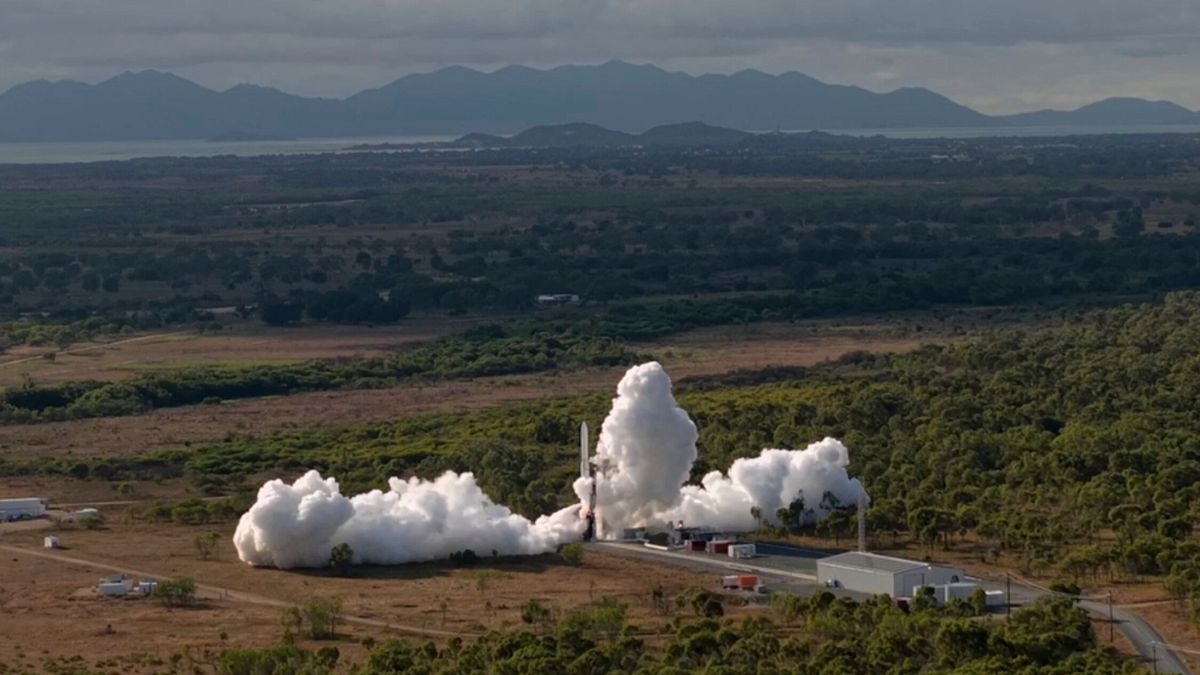
Footage shared by Australian media showed the 23-meter rocket lifting off, hovering briefly above the launch pad, and then suddenly disappearing from view. Smoke clouds rose over the launch area. Fortunately, there were no injuries.

Eris rocket

Despite the unsuccessful outcome, the company described the launch as “successful.” In a Facebook post, Gilmour Space Technologies stated that all four hybrid engines were successfully ignited. The engines ran for a total of 23 seconds, with 14 seconds spent in flight.

The Eris launch had been scheduled earlier but was postponed several times due to technical issues and unfavorable weather conditions. The company’s CEO, Adam Gilmour, noted that the mere fact of getting the rocket off the ground was a significant achievement.

“Of course, I would have liked more time in flight, but I’m satisfied with this result,” he wrote on LinkedIn. Back in February, Gilmour emphasized that for a private space company, a successful first orbital mission is extremely rare. The company had previously stated that they would consider the launch successful if the rocket simply lifted off from the pad. According to official reports, the launch site remained undamaged.

Regional council mayor Rai Collins also commented on the event, calling it a “major achievement” despite the rocket not reaching orbit. “This is just the first step toward a future leap in the commercial space industry, which could develop right here in our region,” he said on his Facebook page.

Eris rocket

Gilmour Space Technologies is funded by private investors and recently received a grant of 5 million Australian dollars (approximately $3.2 million) from the federal government to support further development of the Eris rocket. This followed an earlier deal signed in 2023 worth 52 million Australian dollars, aimed at advancing and commercializing innovative space technologies in Australia.

While hundreds of suborbital launches have taken place within the country, according to NASASpaceFlight, only twice before have rockets been successfully launched into orbit from Australia. The Eris flight marked the first orbital attempt in over 50 years.

Read also: 

  • U.S. Unveils New AGM-181A LRSO Nuclear Cruise Missile for B-21 and B-52 Bombers
  • Rocket Lab Will Launch a NASA Smallsat on an Electron Rocket

Source: phys
Tags: NewsSpace probes
Share3Tweet2ShareShareShareShare1Pin2
Previous Post

French Next-Generation Reconnaissance Aircraft Archange Completes Maiden Flight

Next Post

Israeli IAI Attempted to Modernize Hungarian Helicopters with Russian Help

Svitlana Anisimova

Svitlana Anisimova

I'm addicted to books and stationery, and love everything with flour, sugar, and the hate-to-love trope. Have a lot of guilty pleasures for one girl, and don’t feel guilty about it.

RelatedPosts

NASA Skyfall
Space news

Project Skyfall: NASA’s New Martian Drones Surpass Mach 1

12/05/2026
300
Sweden military spy satellite
Space news

Falcon 9 placed Sweden’s first reconnaissance satellite into orbit ahead of schedule

04/05/2026
220
Space Reactor-1 (SR-1) Freedom
Space news

60 Years of Setbacks and $20 Billion: NASA Is Developing a Nuclear Propulsion System for a Mission to Mars

24/04/2026
276
Voyager 1
Space news

NASA Shuts Down Scientific Instruments on Voyager 1 to Preserve the Mission: What Will Happen to the Spacecraft?

21/04/2026
376
Blue Origin
Space news

New Glenn demonstrated reusability but did not accomplish its primary objective

21/04/2026
111
SpaceX Starship V3
Space news

SpaceX Prepares Its Most Powerful Starship: New Version Passes Key Test

16/04/2026
717
Next Post
IAI Hungary

Israeli IAI Attempted to Modernize Hungarian Helicopters with Russian Help

Leave a Reply Cancel reply

Your email address will not be published. Required fields are marked *

Subscribe

  • Bluesky
  • Facebook
  • Mastodon
  • RSS
  • Twitter

Останні коментарі

  • like a joke до Полювання на дрон біля борту №1: Таємничий безпілотник переслідував борт Дональда Трампа
  • Andrij Kharuk до Все про Cessna 408: Кур’єр зі служби доставки прямує до війська
  • Макс до Все про Cessna 408: Кур’єр зі служби доставки прямує до війська
  • Vladyslav Surkov до Українські розвідники вперше в історії спалили два російських літаки-амфібії Бе-12 у Криму
  • [email protected] до Українські розвідники вперше в історії спалили два російських літаки-амфібії Бе-12 у Криму

Недавні записи

  • Нова успішна операція СБУ: Дрони уразили штаб фсб у Херсонській області
  • Українські дрони атакували школу підготовки пілотів рф: Знищено техніку, боєкомплекти та рембазу
  • Небезпечні маневри: Винищувачі рф перехопили літак британських ВПС над Чорним морем
  • Угода року на $30 млрд: Китай купує 200 літаків Boeing після домовленостей Сі та Трампа
  • T625 Gökbey: Все про новий турецький гелікоптер

Help this site

ПЕРЕМКНУТИ МОВУ:

  • EN
  • UA
  • • CONTACTS
  • • PRIVACY POLICY
  • • GADGETS & TECHNOLOGIES

© 2024-2025 AERONAUT.media

No Result
View All Result
  • NEWS:
  • • Aviation
  • • UAVs & drones
  • • Flying weapon
  • • Space
  • ARTICLES
  • Language:
  • EN
  • UA

© 2024-2025 AERONAUT.media