• • CONTACTS
  • • PRIVACY POLICY
  • • GADGETS & TECHNOLOGIES
AERONAUT.media
  • NEWS:
  • • Aviation
  • • UAVs & drones
  • • Flying weapon
  • • Space
  • ARTICLES
  • Language:
  • EN
  • UA
No Result
View All Result
  • NEWS:
  • • Aviation
  • • UAVs & drones
  • • Flying weapon
  • • Space
  • ARTICLES
  • Language:
  • EN
  • UA
No Result
View All Result
AERONAUT.media
No Result
View All Result
Home News Space news

Rocket Lab Will Launch a NASA Smallsat on an Electron Rocket

Julia Alexandrova by Julia Alexandrova
15/05/2025
in Space news
0
NASA Smallsat
24
SHARES
462
VIEWS

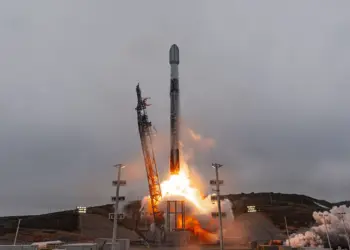
On 14 May, NASA announced that it has chosen Rocket Lab to launch the Aspera mission aboard an Electron rocket. Liftoff is pencilled in for no earlier than the first quarter of 2026 from Launch Complex 1 in New Zealand.

The task order was issued under NASA’s Venture-Class Acquisition of Dedicated and Rideshare (VADR) contract. As with previous VADR awards, the agency did not disclose the price, citing “competition-sensitive” pricing for future procurements.

Electron

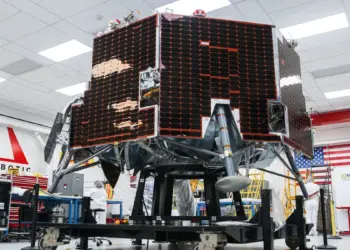
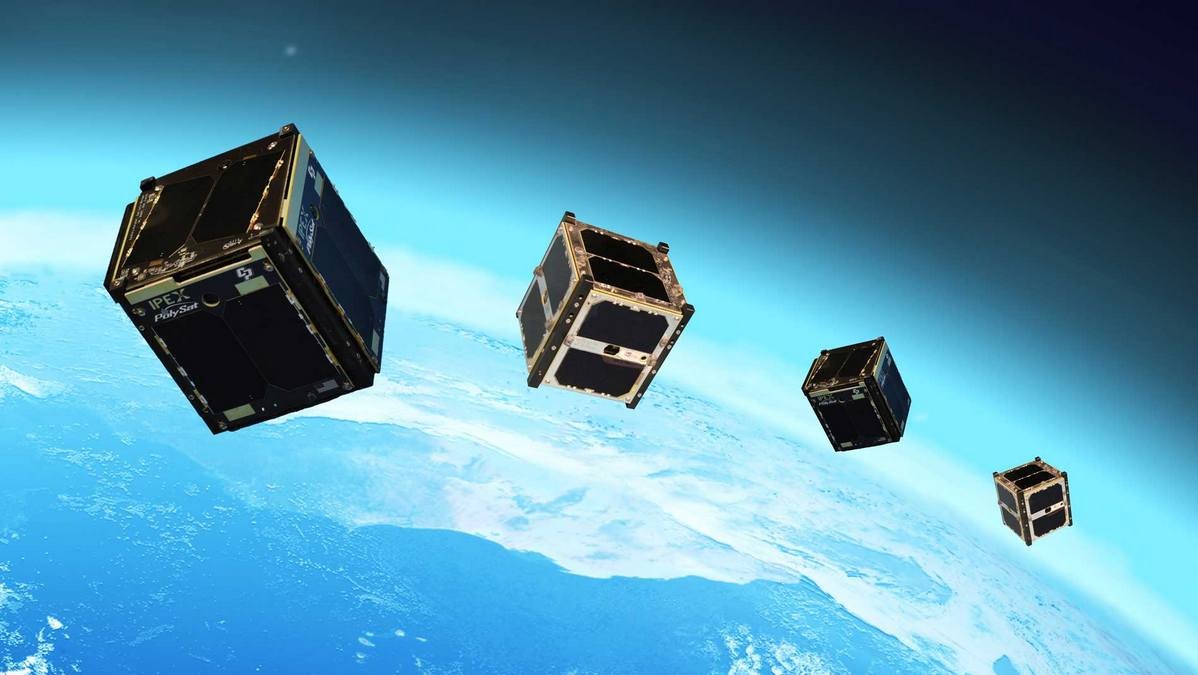
Aspera is a 60-kilogram satellite equipped with a compact ultraviolet telescope designed to observe hot gases in the intergalactic medium – the diffuse matter between galaxies. Its mission includes studying how this gas flows into and out of galaxies. The data collected by Aspera will help astronomers estimate how much gas exists in this intergalactic space and better understand its role in the process of star formation.

NASA Smallsat

“We have a good understanding of how much gas should be in galaxies to account for the stars we see, but despite extensive searches, most of it remains missing,” said Carlos Vargas, an assistant professor at the University of Arizona and the principal investigator for the Aspera mission. His comment came in an April press release about the spacecraft’s delivery from the University of Toronto’s Space Flight Laboratory.

NASA selected Aspera in 2021 as part of its inaugural group of Astrophysics Pioneers missions – a program focused on low-cost space science projects using small satellites or balloon platforms, each capped at \$20 million. The agency approved four such missions, anticipating that some might run into issues beyond the program’s budget limits. However, all four have continued development. NASA also selected SpaceX to launch another Pioneers mission, Pandora, earlier this year under the same VADR contract framework.

NASA Smallsat

Aspera is the latest in a series of small satellite missions that NASA has assigned to Rocket Lab for launch. Nearly a year ago, the company launched a pair of PREFIRE satellites designed for Earth science research, using back-to-back Electron missions. In May 2023, Rocket Lab also launched four TROPICS satellites for storm monitoring across two Electron rockets. Earlier, in 2022, the company handled the launch of the lunar-bound CAPSTONE spacecraft.

NASA Smallsat

“Electron has proven itself as a leading small launch vehicle, offering tight schedule control and consistently accurate orbital delivery. We look forward to delivering the same performance for the Aspera mission,” said Peter Beck, CEO of Rocket Lab, in a statement regarding the launch contract.

Source: Spacenews
Tags: NASANewsSpace probes
Share9Tweet6ShareShareShareShare2Pin3
Previous Post

Australian Eris Rocket Prepares for Historic Space Launch

Next Post

All about the new F-47 and the NGAD programme

Julia Alexandrova

Julia Alexandrova

Coffee lover. Photographer. I am writing about science and space. I think it's too early for us to meet aliens. I follow the development of robotics, just in case ...

RelatedPosts

Blue Origin rocket
Space news

Fiery Apocalypse: Giant Blue Origin Rocket Explodes on Launch Pad

29/05/2026
152
NASA Skyfall
Space news

Project Skyfall: NASA’s New Martian Drones Surpass Mach 1

12/05/2026
306
Sweden military spy satellite
Space news

Falcon 9 placed Sweden’s first reconnaissance satellite into orbit ahead of schedule

04/05/2026
229
Space Reactor-1 (SR-1) Freedom
Space news

60 Years of Setbacks and $20 Billion: NASA Is Developing a Nuclear Propulsion System for a Mission to Mars

24/04/2026
284
Voyager 1
Space news

NASA Shuts Down Scientific Instruments on Voyager 1 to Preserve the Mission: What Will Happen to the Spacecraft?

21/04/2026
383
Blue Origin
Space news

New Glenn demonstrated reusability but did not accomplish its primary objective

21/04/2026
114
Next Post
Все про новий винищувач F-47 та програму NGAD

All about the new F-47 and the NGAD programme

Leave a Reply Cancel reply

Your email address will not be published. Required fields are marked *

Subscribe

  • Bluesky
  • Facebook
  • Mastodon
  • RSS
  • Twitter

Recent Comments

  • Haley Knudsen on Month of Silence and Uncertainty: European Space Agency Reestablishes Contact with Proba-3 Spacecraft
  • JoeRonamo on Tomahawk Cruise Missiles – What You Need to Know
  • Richard on Light Fighters: Useful Option or an Unnecessary Substitute?
  • asansör perdesi on Everything About the Bell AH-1Z Viper and UH-1Y Venom Helicopters: History, Specifications, and Prospects in Ukraine
  • Vladyslav Surkov on A-10 Thunderbolt II Attack Aircraft Escort Nuclear Submarine Wyoming During Drills

Recent Posts

  • Weapons of Ukraine’s Victory: Meteor Air-to-surface Missile
  • Hellish Ashes in Taganrog: Ukrainian Unmanned Systems Forces Turn Pride of Russian Aviation and Iskander missile system into Scrap
  • Middle Strike: How Ukraine Is Building a New Class of Medium-Range Strike Systems
  • Return of Cold War Legend: The U.S. B-1B Bomber to Be Armed with Hypersonic Missiles
  • Fiery Apocalypse: Giant Blue Origin Rocket Explodes on Launch Pad

Help this site

SWITCH LANGUAGE:

  • EN
  • UA
  • • CONTACTS
  • • PRIVACY POLICY
  • • GADGETS & TECHNOLOGIES

© 2024-2025 AERONAUT.media

No Result
View All Result
  • NEWS:
  • • Aviation
  • • UAVs & drones
  • • Flying weapon
  • • Space
  • ARTICLES
  • Language:
  • EN
  • UA

© 2024-2025 AERONAUT.media