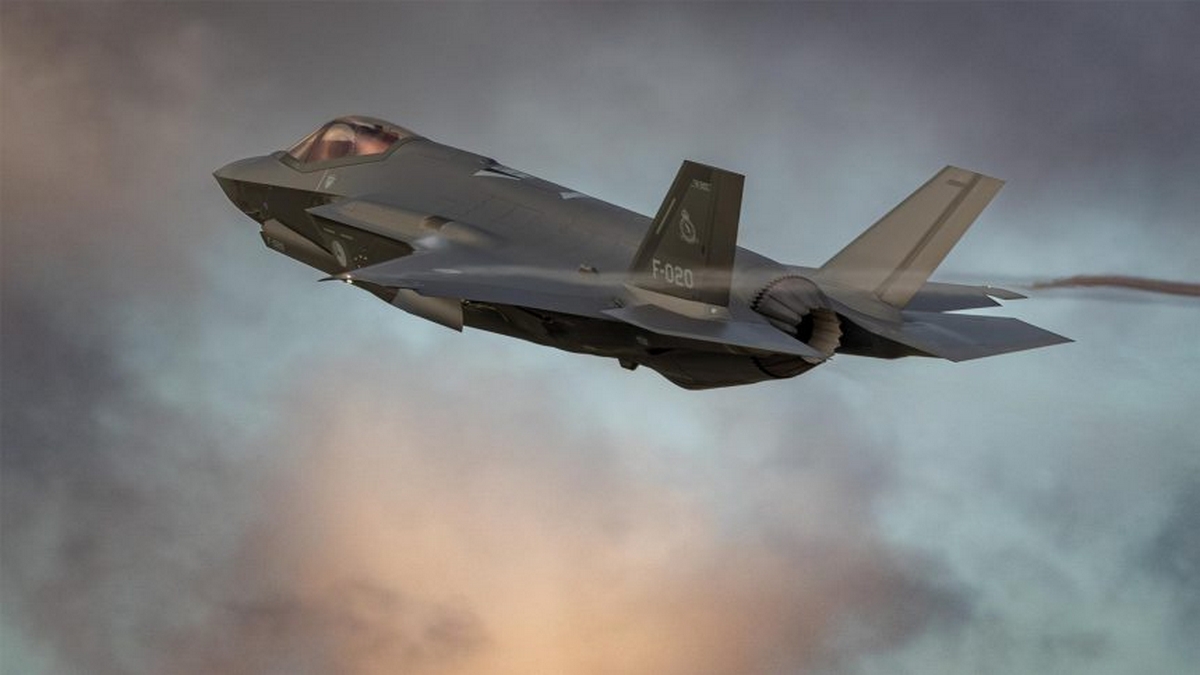
Dutch State Secretary for Defence Gees Tuinman stated that the software of the F-35 Lightning II fighter jet could theoretically be “hacked.” He made the comment during an interview with BNR Nieuwsradio while discussing the operational independence of the F-35 from the United States amid tensions between Europe and the Trump administration. Currently, the F-35 is the only combat aircraft in service with the Netherlands.
Tuinman, who assumed office in July 2024, emphasized that there are currently no signs Washington intends to take actions that could jeopardize the aircraft’s operation – such as halting software updates or disrupting supply chains. Earlier reports have suggested that claims of a so-called “kill switch” in the F-35 are unlikely. Nevertheless, dependence on the U.S. for software updates, mission data files (MDF), and the complex technical support and logistics system could pose risks if long-term American support were unavailable.

Such a move by the U.S. would likely also harm its own interests, undermining confidence in American arms exports and making European air defense systems more vulnerable and increasingly dependent on U.S. intervention.
At the same time, Tuinman suggested that, in a worst-case scenario, the F-35 software could be modified without the manufacturer’s permission. He compared this to “jailbreaking” an iPhone – a process that unlocks hidden capabilities but voids warranties and increases the risk of malfunctions or vulnerabilities. He provided no specific details and noted that the topic is not intended for public discussion.
It is impossible to verify how accurate his claims are or the basis for them. It may only describe a theoretical scenario without practical implementation. Nevertheless, during periods of political uncertainty, states typically consider contingency options even when relations are otherwise stable.
However, implementing such an approach would be extremely challenging. The F-35’s software comprises over 8 million lines of code, and its security systems were developed to meet high standards. Throughout the program’s history, there have been varying assessments regarding allied access to the source code. The closest to full access are the United Kingdom, as a first-tier development partner, and Israel, which has the right to independently modify certain elements of its F-35I “Adir” variant. In 2019, Japan was reportedly offered limited access. The Netherlands, as a second-tier partner, has never had direct access to the source code.
Even if unauthorized modifications were technically possible, they could result in the country being excluded from future official updates. This would effectively “freeze” the aircraft in its current configuration, preventing integration of new weapons, sensors, or technologies. Updating the mission data files (MDF) would also remain critical, as without them the aircraft would be unable to correctly identify or counter emerging enemy systems.
Moreover, even a hypothetical “hack” of the software would not address the issue of physically supplying components. While some parts are manufactured in Europe, a significant portion of components is produced exclusively in the United States. European lines handle the final assembly of the F-35 and its F135 engine but remain dependent on transatlantic shipments of key modules.
The global supply chain involves dozens of countries contributing components to a centralized distribution system, which then delivers them to operators via the ALIS and ODIN logistics platforms. Manufacturers do not supply parts directly to individual countries – the distribution is strictly centralized. This model is why several nations have previously rejected calls to restrict F-35 part deliveries to Israel, as the program does not allow for selective distribution.
Read also:
- Cessna 408 SkyCourier: From Commercial Cargo Aircraft to Military Use
- MQ-25 Stingray Drone for U.S. Navy Aircraft Refueling Begins Testing
Source: TheAviationist