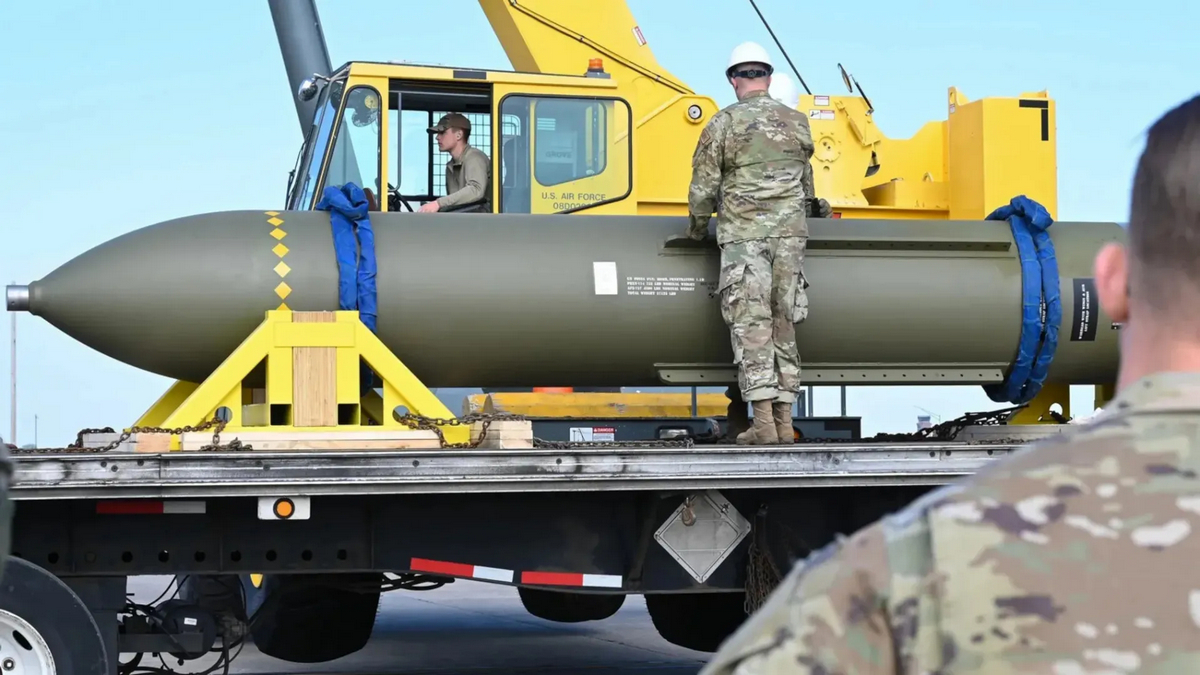
Last year, U.S. specialists successfully conducted reverse engineering of a critical component of the 13-ton GBU-57/B Massive Ordnance Penetrator (MOP).
By leveraging technological solutions derived from the ATACMS ballistic missile system, the development timeline was reduced by approximately four years, enabling a rapid replacement of obsolete components. This effort forms part of the United States Department of Defense strategy to address “vendor lock-in,” a situation in which the department becomes dependent on the intellectual property of a single contractor.

The need to replenish stocks emerged after Operation Midnight Hammer, during which B-2 Spirit stealth bombers deployed 14 units of the GBU-57/B Massive Ordnance Penetrator against Iranian nuclear facilities. According to a recently disclosed contract justification with Boeing, the U.S. Air Force plans to begin deliveries of new KMU-612/B tail kits starting in January 2028.
The tail assembly is a critical component, as it integrates an inertial navigation system with GPS correction, enabling precise engagement of deeply buried targets.
Documents indicate that over 18 years of development, Boeing retained full control over the technical documentation and guidance algorithms related to the GBU-57/B Massive Ordnance Penetrator program. In August 2025, the government reportedly attempted to acquire the intellectual property rights to the MOP system but was denied. This outcome prompted the military to pursue independent reproduction of key components. While fully replicating all systems would likely have taken more than five years, adapting existing technologies developed by Lockheed Martin under the ATACMS program provided a significantly faster alternative.
The issue of “vendor lock-in” extends beyond this program. Similar concerns have been raised in projects such as the F-35 Lightning II, where restricted access to spare parts and technical data has created operational risks. The current U.S. administration is pursuing reforms aimed at allowing third-party contractors to integrate their modules into major weapons systems without being blocked by prime manufacturers.
The experience with the GBU-57/B Massive Ordnance Penetrator is expected to influence procurement decisions for its future successor, the Next Generation Penetrator (NGP). Until rearmament efforts are completed, the MOP remains the only conventional U.S. capability designed to strike deeply fortified targets in countries such as Iran, North Korea, or China.
Read also:
- First Ukrainian-German Drone Manufacturing Company Launches in Munich
- MQ-25 Stingray Drone for U.S. Navy Aircraft Refueling Begins Testing
Sourse: TWZ