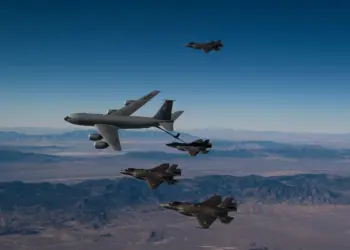
A Chinese private company, MizarVision, which specializes in geospatial intelligence, claims it was able to track the flights of U.S. KC-135 and KC-46 aerial refueling aircraft during Operation Epic Fury.
In a report published earlier this month, the company analyzes these movements and suggests correlations with strike patterns targeting locations in Iran. While recent U.S. strikes over the past month came as a surprise to many observers, tanker aircraft data provided additional insight into operational positioning and routing.
Although strategic bombers typically attempt to conceal their movements, refueling aircraft continue to transmit location data via the Automatic Dependent Surveillance–Broadcast (ADS-B) system, which is publicly accessible. According to MizarVision researchers, this data was used to infer bomber flight paths and to form an understanding of the structure and execution of strike operations.

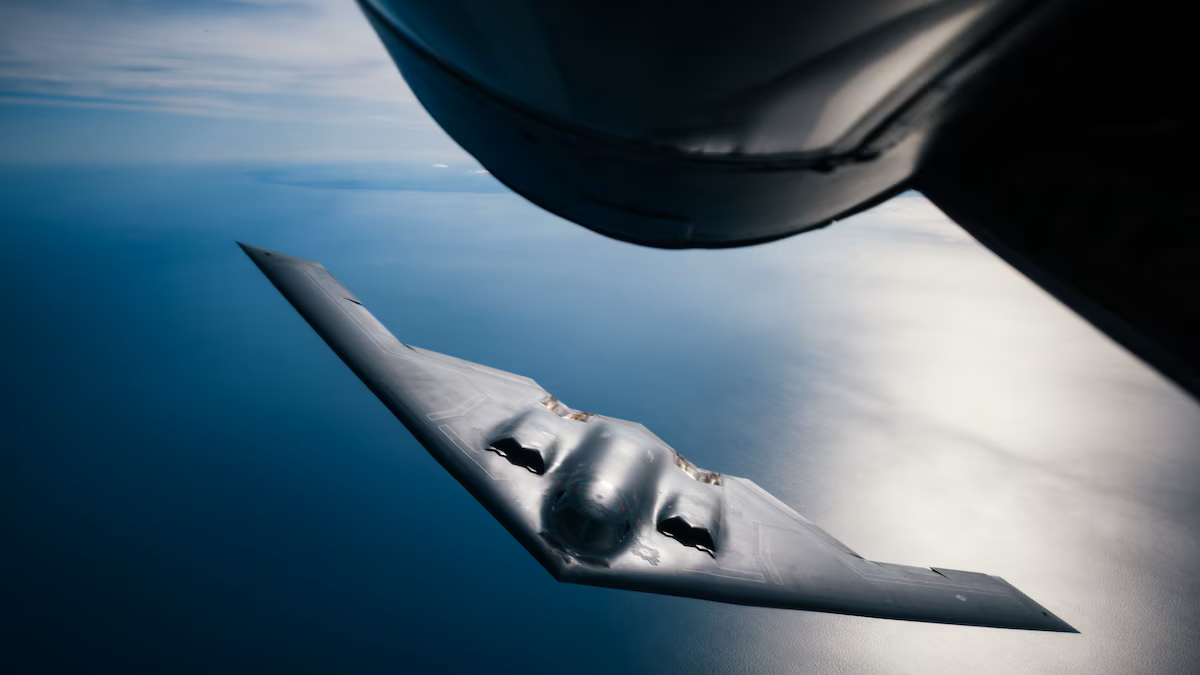
Before the ceasefire announced last week, Dan Caine, Chairman of the Joint Chiefs of Staff, confirmed that the United States conducted 62 bombing missions. These operations involved all three strategic bomber types: B-1 Lancer, B-2 Spirit, and B-52 Stratofortress.
United States Central Command had previously stated that B-1 aircraft were used to degrade Iran’s ballistic missile capabilities, while B-52 bombers targeted command and control centers associated with missile systems. Media reports also indicated that B-2 aircraft deployed bunker-penetrating munitions against a facility believed to be used by the Islamic Revolutionary Guard Corps.
Based on data from MizarVision, the strike patterns can be divided into three phases.
According to the report, the initial phase, which lasted from March 1 to March 5, showed activity primarily involving aerial refueling aircraft. Although the volume of intelligence data during this period was limited, MizarVision reported a likely refueling operation involving a B-52H over the Mediterranean Sea. Most of the observed activity was concentrated over Israel and the Mediterranean, as the United States sought to establish and maintain air superiority in the region.
In the second phase, which lasted from March 9 to March 14, aerial refueling aircraft were observed over Saudi Arabia and the Persian Gulf, supporting B-1 Lancer and B-2 Spirit operations involved in strikes against Iran. The company also identified specific areas within the Gulf where these bombers were operating during this period.
On March 13, a U.S. refueling aircraft was tracked en route to Saudi Arabia, which functioned as a key logistical hub during this phase of the operation. As the active phase intensified between March 15 and March 17, tanker aircraft continued to support strike missions carried out by B-1B bombers.
On March 17, refueling activity was recorded over the Strait of Hormuz, along with the presence of an E-3 Sentry airborne early warning and control aircraft. This indicated a fully integrated operational setup involving reconnaissance, strike platforms, and aerial refueling.
During the same period, reports also noted attacks on Islamic Republic of Iran Navy vessels and facilities on Kharg Island, a key center for Iran’s oil exports.
Analysts at MizarVision also reportedly used artificial intelligence for this tracking, although the exact nature of the algorithms has not been disclosed, according to South China Morning Post. At the same time, experts note that building precise operational models based on the movement of aerial refueling aircraft involves a significant degree of uncertainty. Nevertheless, such data remains relatively accessible for observation and can provide indirect indicators of bomber activity and operational patterns.
Read also:
- Japan Develops Autonomous Drone and Low-Cost Missile Capabilities in Response to China
- Ukraine Develops Air-Launched Ballistic Missile: What Is Known
Source: interestingengineering