Earlier this year, the Belgian Air Force reported tests of fighter jets equipped with FZ275 laser-guided rockets as part of efforts to evaluate counter-drone capabilities. More recently, the military released footage showing F-16 aircraft using FZ275 rockets, produced by Thales Belgium SA, to engage unmanned aerial vehicles.

The exact date of the tests has not been specified, but Belgian Defence reported that they took place in the northwest of the country. Inert (non-explosive) rockets were used during the trials. According to a post by the publication on its Twitter account: “The Air Force conducted tests in Lombardsijde of counter-UAV capabilities against medium-sized drones. In cooperation with the Army, Navy, and Thales Belgium, 70 mm FZ275 rockets without a warhead were tested on F-16 aircraft. This is an effective and cost-efficient solution to counter the threat posed by unmanned aerial vehicles.”
The Belgian Air Force operates approximately 44 F-16AM/BM Fighting Falcons. In addition, the country has ordered 34 F-35A Lightning II aircraft and plans to acquire 11 more. As part of the current contract, 11 F-35s have already been delivered, with eight stationed at an airbase in Arizona, where pilot training is ongoing.
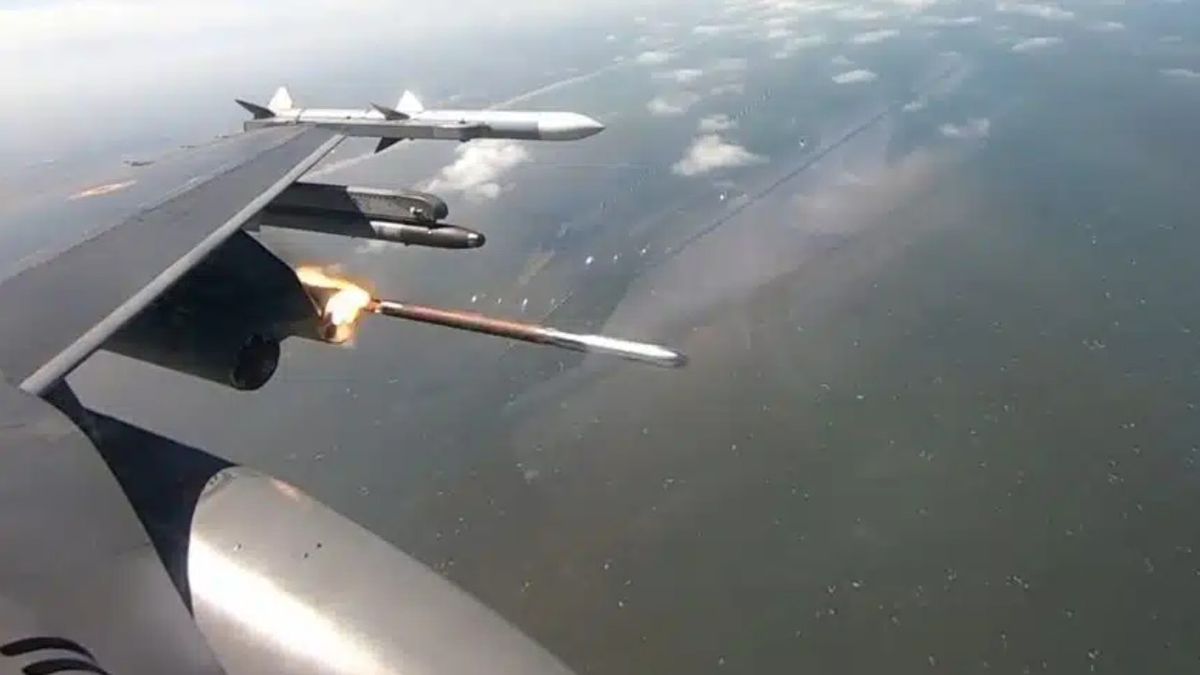
The video released by the Belgian military shows one of the F-16s involved in the tests. It is armed with at least two LAU-131A/A seven-tube pods mounted under the left wing. Different shots of the wing indicate that each pod contains a 2.75-inch (70 mm) FZ275 LGR rocket loaded in separate launch tubes. This may suggest that the footage includes multiple sorties conducted during the test campaign. Cockpit footage also shows the moment of rocket launch from one of the pods and the engagement of an unidentified drone, visible through infrared imagery.
In the trials previously reported by Belgium’s Directorate General for Material Resources (DGMR), the F-16 was configured with six LAU-131A/A pods, providing a total payload of 42 rockets. It was also noted at the time that the FZ275 system is being tested alongside the AGR-20F FALCO system from BAE Systems as part of an evaluation of counter-drone capabilities.
Even when using relatively low-cost effects such as laser-guided rockets or helicopter-mounted guns, a cost imbalance remains in countering small aerial threats with large platforms. Anti-drone platforms themselves can cost tens of millions of dollars, while the drones they target may be valued at under $50,000. Some of the simplest systems used in Ukraine and Russia can cost as little as $5,000–$10,000.
A potentially more effective option for the European operational environment could be the Bird of Prey interceptor drone developed by Airbus, which employs a Mark-1 air-to-air missile. Such a system aims to bring the cost of the platform, weapon, and target into better alignment.
Meanwhile, Ukraine has managed to reduce the cost of intercepting Russian drones through the use of conventional anti-aircraft guns, interceptor drones, and electronic warfare systems. In some cases, this cost balance has even been reversed – for example, in March, Ukrainian forces reportedly used an FPV drone to down a Russian Ka-52 “Alligator” attack helicopter.
In another video, a Ukrainian FPV drone is shown destroying Russian Mi-17 and Mi-28 helicopters on the ground. According to the report, the incident took place in Voronezh, approximately 150 km from the front line.
One of the more recent developments is the reported use of the P1-Sun interceptor drone system, mounted on an An-28 turboprop aircraft, for night-time hunting of Russian “Geran” drones.
Ukraine has also employed larger-scale systems, including F-16 aircraft equipped with APKWS munitions and French Mirage 2000 fighters, to intercept Russian drones and cruise missiles at longer ranges.
At the same time, asymmetric solutions such as small interceptor drones like the “Sting,” which can be launched both from the ground and from airborne platforms, remain a primary countermeasure. These systems have demonstrated effectiveness, including in engagements against “Geran”-type drones, in some cases using R-60 missiles.
Read also:
- Weapons of Ukraine’s Victory: Sting UAV Interceptor
- Interview with founders of Ukrainian Global Drone Academy: How drone warfare culture and operator mindset are shaped
Source: theaviationist