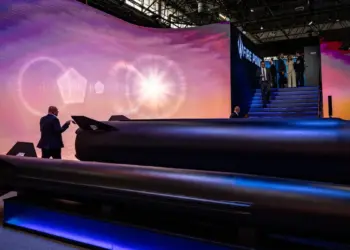
Ukrainian defense company Fire Point has officially joined an international missile defense alliance and introduced Freya, a proposed pan-European ballistic missile defense initiative. The proposed architecture is based on a domestically developed interceptor missile designed to meet NATO standards and integrate with existing Ukrainian and Western air defense infrastructure.

Co-founder and chief designer Denys Shtilerman stated that, despite various operational challenges and competing priorities, the team continues to make steady progress. He confirmed the company’s participation in the missile defense consortium and said that the new interceptor systems are expected to contribute to the protection of not only Ukraine’s airspace, but also broader European territory. The presentation materials released by the company include detailed technical specifications of the interceptor, an overview of the system architecture, and descriptions of interoperability and communication protocols.
The primary objective of Freya is to establish a coordinated air and missile defense framework focused on countering ballistic threats without strict dependence on specific component suppliers. The concept emphasizes ballistic missile interception, the use of open-architecture solutions to reduce reliance on proprietary systems, scalability, and a significant reduction in per-intercept costs. The cost factor is particularly important for Ukraine, where a major operational challenge remains the economic imbalance between the relatively low cost of drones or mass-produced ballistic missiles and the substantially higher cost of the Western interceptors currently used to neutralize them.
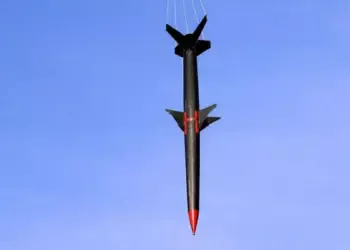
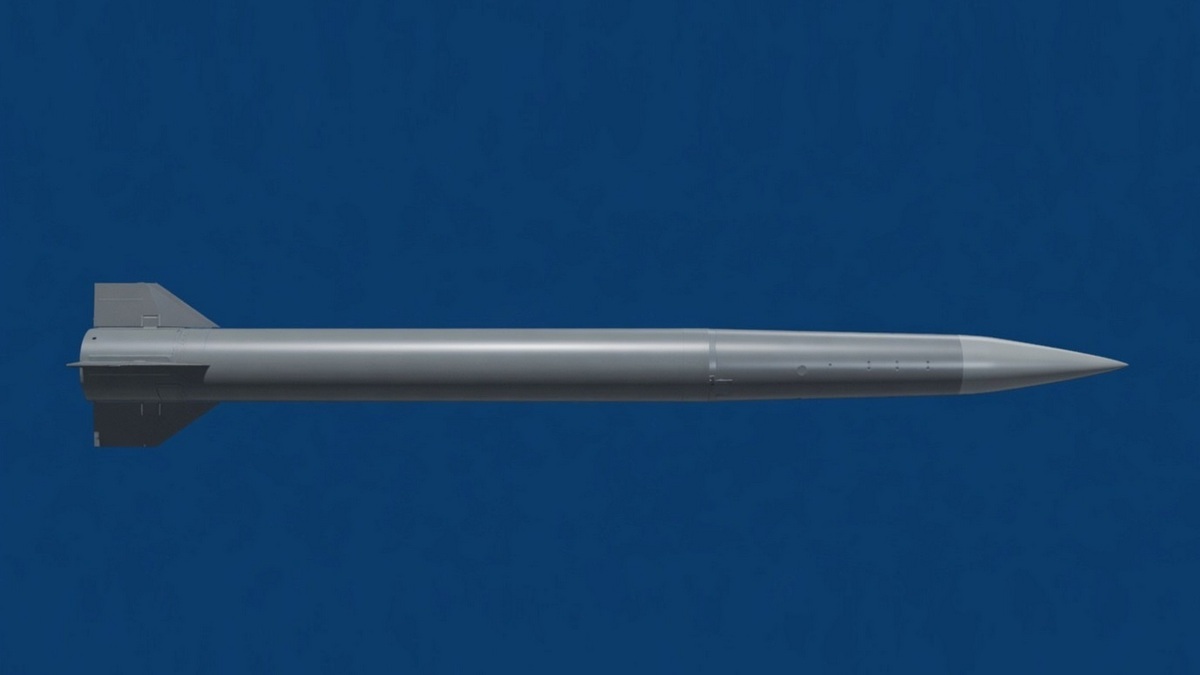
The central element of the system is the FP-7.x interceptor. The lightweight, compact missile is manufactured using advanced composite materials, an approach intended to reduce production costs. According to the published specifications, the missile is 7.25 meters long, with an overall external diameter of 1.15 meters including the aerodynamic fairing, while the main body diameter is 0.53 meters. The interceptor is designed to reach speeds of 1,500 to 2,000 meters per second, equivalent to approximately Mach 4.4 to Mach 5.9. This performance places the FP-7.x in the category of high-speed interceptors intended to engage ballistic threats during the terminal phase of flight. Target guidance is provided by an infrared optical seeker. Semi-active guidance technology for the system is supplied by Diehl Defence, a German defense manufacturer known for its work on missile control and fuze technologies.
The interceptor’s hardware ecosystem incorporates components from multiple defense manufacturers across NATO member states. For long-range target detection, the system is designed to operate with radar platforms such as the Saab Giraffe 8A, Saab Giraffe 4A, Thales Ground Master 400, and Hensoldt TRML-4D, all of which are widely used within NATO air defense networks. Target illumination and fire-control functions are assigned to radar systems including the Weibel GFTR-2100/48 and Leonardo KRONOS Land. These systems provide the continuous-wave emissions required for stable target acquisition by the missile’s semi-active guidance seeker.
The launcher itself is mobile and has been developed directly by the Ukrainian manufacturer. The command-and-control segment is based on the Kongsberg FDC platform, which uses an open architecture and Network Access Nodes for integrated battlefield coordination. The fire distribution center is an established solution already used in multiple Western air defense programs.
Communication between all system elements is handled through the Link 16 tactical data link, standardized under STANAG 5516. This protocol serves as the primary interface for integrating Freya into Ukraine’s existing air defense network. Ukraine obtained access to the non-commercial NATO CRC System Interface, enabling the use of Link 16, under a licensing agreement dated May 29, 2025. The Ukrainian operational and tactical situational awareness system “Delta” has already been successfully integrated with the protocol and operates within the shared network environment. Additional radar communication is conducted through the ASTERIX data exchange standard, while in-flight course correction for the FP-7.x interceptor is performed via a full-duplex data link. The system also supports platform-to-platform information exchange, voice communications, and coordination with ground units.
Read also: Weapons of Ukrainian Victory: Review of the Patriot air defense system
The development of Freya comes against the backdrop of the highly diverse range of air defense systems currently operated by Ukraine, including NASAMS, SAMP/T, MIM-104 Patriot, Crotale, IRIS-T SLM, S-300, Buk, Gepard, and Stormer HVM, among others. The open architecture of the Kongsberg FDC command center allows Ukraine to independently develop interoperability scenarios across this mixed inventory. The presence of systems originating from different generations and manufacturers increases network resilience, but also creates integration challenges due to incompatible control interfaces. Freya is intended to address this interoperability gap.
Positioning the project as a pan-European initiative also reflects Fire Point’s broader ambition to enter the European missile defense market at a time when NATO member states are significantly increasing defense spending. The use of established technologies from companies such as Saab, Thales, Hensoldt, Weibel Scientific, Leonardo, and Kongsberg Defence & Aerospace, combined with a Ukrainian-developed interceptor and launcher platform, gives the system a distinctly multinational profile.
Read also: