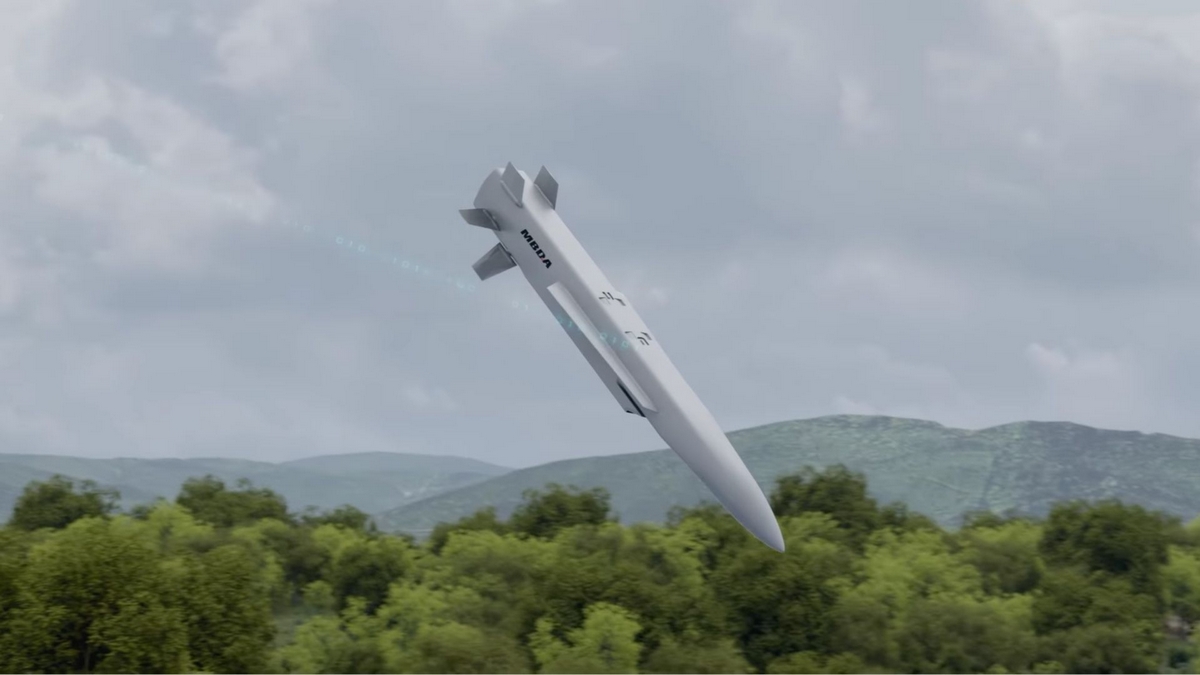
In April 2026, during parliamentary hearings, General Fabien Mandon confirmed the development of the STRATUS missile. The system is intended to restore a key French operational capability in the context of increasingly sophisticated modern air defense systems. The program is associated with the ability to penetrate adversary defensive networks in the early phase of a conflict, which is considered relevant for high-intensity operations within the NATO framework.

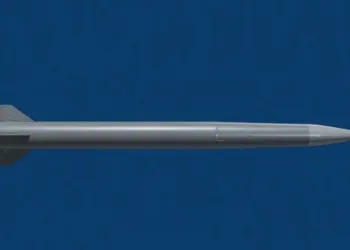
The missile is being designed with consideration of contemporary battlefield conditions. It is expected to be integrated into the future Dassault Rafale F5 standard and to be deployable from naval platforms as well. The development is led by MBDA under the Franco-British FCASW program, which was renamed STRATUS in September 2025. A central technical objective is achieving speeds below Mach 5 using a ramjet propulsion system. The missile is described as a multi-role strike asset intended for suppression of enemy air defenses, anti-ship missions, and engagement of high-value airborne targets, including airborne early warning aircraft and aerial refueling tankers.
The program forms part of a broader European initiative. France’s updated 2026 defense legislation explicitly identifies the need for a new missile capability focused on air defense suppression and anti-ship warfare, aligned with the development of the Rafale F5 standard.
France is leading the development of the STRATUS RS variant, previously known as RJ10. This configuration prioritizes speed and maneuverability over low observability.
The system is intended to penetrate modern air defense networks through high-speed approach profiles. In contrast to subsonic cruise missiles, STRATUS is designed to reduce the adversary’s reaction time. Its velocity and maneuvering capability are intended to enable rapid target engagement and improve effectiveness during the terminal phase of flight.
Work on key subsystems is already underway. The guidance system involves contributions from Thales Group and MBDA UK. Testing of the ramjet propulsion component has been conducted in supersonic wind tunnels in Bourges, one of France’s established aerospace testing centers. The missile architecture is being adapted for multiple mission profiles, including anti-ship warfare, suppression and destruction of air defense systems, and strikes against airborne command-and-control assets.
The STRATUS program is expected to significantly alter France’s existing missile inventory. At present, France relies on the SCALP cruise missile for long-range strike missions. The system has a mass of approximately 1,300 kg and a length of about 5.1 meters. SCALP uses a combination of GPS guidance, terrain contour matching, and infrared terminal homing to achieve precision against fixed targets. However, it is designed primarily for pre-planned operations and operates at subsonic speeds. This limits its effectiveness against mobile targets or time-sensitive targets in complex operational environments.
France also operates the Exocet AM39 anti-ship missile with a range of approximately 69 km. The naval Exocet MM40 Block 3C variant is capable of engaging targets at ranges of up to around 249 km and is equipped with modern guidance systems. In addition, the MdCN missile provides long-range strike capability against land targets from surface vessels and submarines.
Despite this, none of the existing systems combines supersonic speed, maneuverability, and multi-role functionality within a single platform, which STRATUS is intended to provide.
According to General Mandon, following the end of the Cold War, France reduced its focus on such capabilities. However, the evolution of modern air defense systems has prompted a renewed emphasis on penetration-oriented concepts. Contemporary warfare is characterized by layered defensive networks, long-range missile systems, mobile radar units, and distributed command-and-control architectures, which can effectively restrict access to large areas without prior suppression.
STRATUS is being developed as a tool intended to address this capability gap. Its speed is expected to enable launches from greater stand-off distances while still allowing rapid engagement of targets. This reduces the time available for an adversary to respond and places radar operators under time pressure, forcing operational decisions about whether to activate systems and risk detection or to keep them offline, potentially creating gaps in coverage. The description is framed in terms of reducing reaction time and increasing the difficulty of maintaining continuous air defense coverage in a contested environment.
The missile is also expected to be integrated into a broader ecosystem of future combat operations. The Rafale F5 is planned to operate in coordination with combat drones developed on the basis of the nEUROn program. Combined with electronic warfare assets, STRATUS is intended to form part of a networked strike system. In this configuration, it is described as a means of creating corridors through enemy air defense networks, enabling subsequent attacks by other missiles, unmanned systems, or manned aircraft.
Read also:
- Rafale for Ukraine: What Kind of Aircraft Is It and What Could It Mean?
- Weapons of Ukraine’s Victory: MICA Air-to-air Missile
Read also: interestingengineering