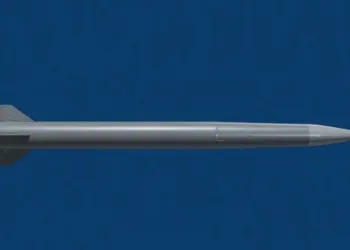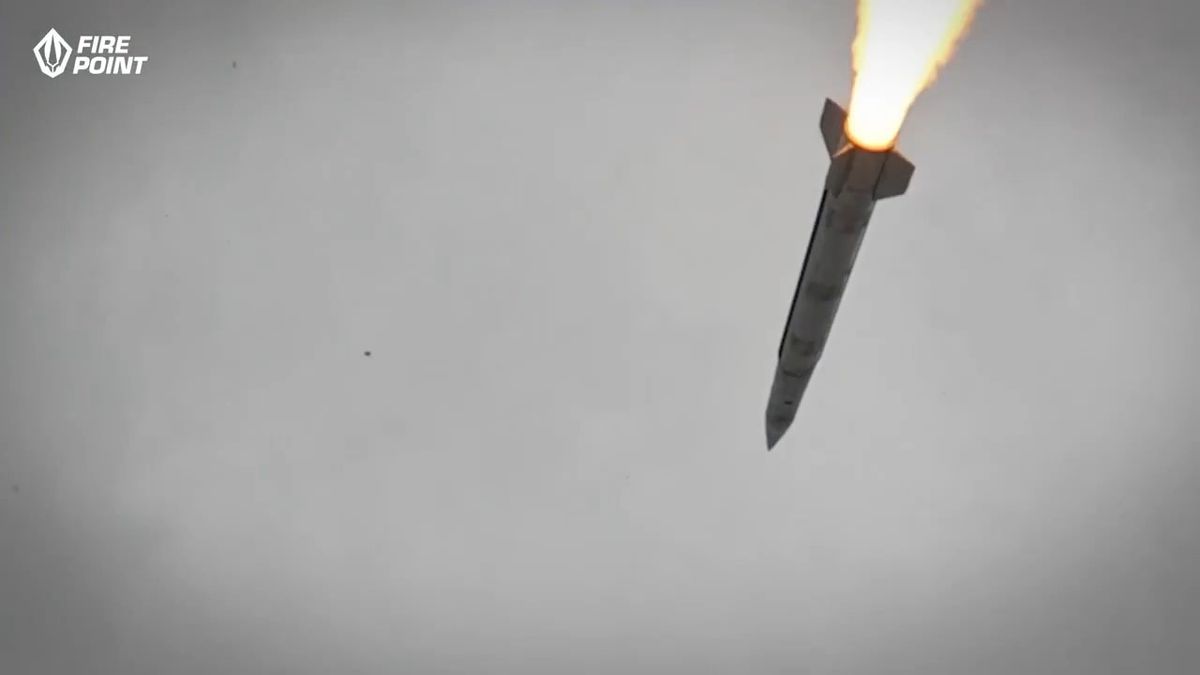
The company Fire Point announced the transition to a new phase of testing for the Ukrainian FP-7 ballistic missile, during which test strikes are planned over Russian territory. According to company representatives, the missile is a new development based on the Soviet 48N6 missile, which is used in the S-400 surface-to-air missile system. The FP-7 is reported to be capable of striking targets at distances of up to 300 km, and initial tests have already been conducted. The testing program is now set to move to the next stage.
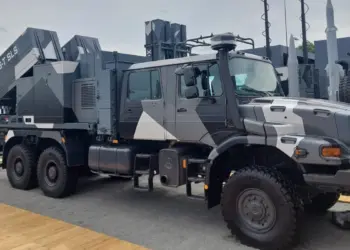
This information was provided by Denis Shtilerman, co-founder and chief designer of Fire Point. He noted that the missile is launched from a trailer-mounted launch platform.

According to the chief designer, the Ukrainian FP-7 ballistic missile is comparable in performance to the American ATACMS missile, while its cost is approximately half. The range of both systems is similar and can reach up to 300 km, depending on the warhead weight. However, the Ukrainian design is less compact than its American counterpart.
Shtilerman emphasized that most of the missile’s components are produced in-house by the company. Nearly all elements – from engines to the flight controller – are manufactured internally. The only component sourced from external suppliers is the warhead. He also noted that missile production begins before the codification process is complete, a practice intended to avoid delays and maintain required production pace.
The chief designer stated that the missile has already completed its first flight, and developers are now moving on to the next phase of testing. He added that the upcoming stage of tests is planned to be conducted over “any neighboring territories.”
Commenting on the cost of ballistic missiles, Shtilerman noted that their high price is largely due to bureaucratic procedures inherent to defense projects. He added that this situation is typical for the defense industry worldwide. “For example, the Boeing 747 took six years from concept to first commercial flight, while the Airbus A380 required 25 years. Much of this is due to bureaucratic overhead. Numerous engineers, lawyers, and managers are needed to process paperwork that is often unnecessary. Testing can continue for years,” Shtilerman explained.
According to Shtilerman, these factors significantly increase development costs, making even relatively simple weapons expensive. In response, the Ukrainian authorities made a key decision to shift much of the bureaucratic burden to the codification process for unmanned systems, as noted by the Fire Point co-founder.
“That’s why we codify everything as drones: both the FP-5 and the FP-7 are treated this way. We don’t have time to go through the old codification methods. If we followed the procedures set by military bureaucracy, we still wouldn’t have tested the FP-drone,” Shtilerman explained.
At the end of February, the company demonstrated the first launch of the FP-7. Published footage showed the launch and the initial segment of the missile’s trajectory. The missile reaches a maximum speed of approximately 5,400 km/h and a peak altitude of up to 65 km. The full flight cycle lasts 250 seconds.
Read also:
- Ukrainian Drones Sink Russian “Raptor”: Strike Captured on Video
- Ukraine Strikes Russian “Kremniy El” Plant with Storm Shadow Missiles
Source: 24tv