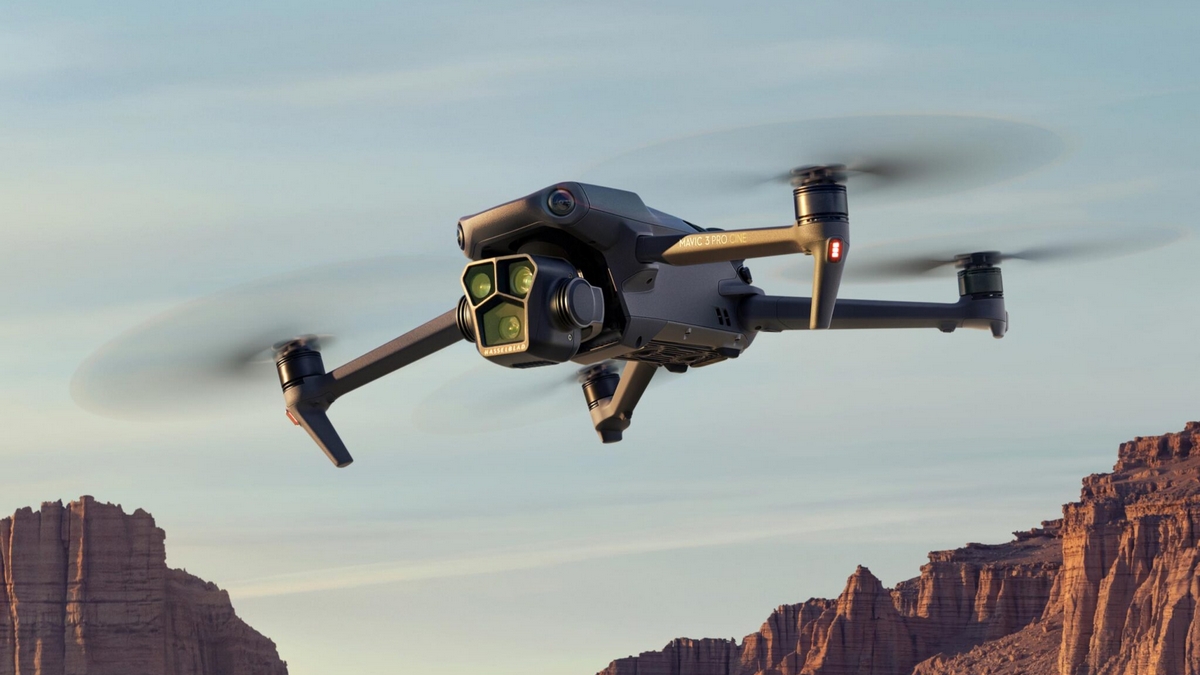
The United States imposed restrictions on some of the world’s most advanced consumer and commercial drones, yet has not established sufficient domestic production to replace them. In late 2025, U.S. authorities limited the operations of DJI, a company that previously accounted for around 80% of the U.S. market, contributing to significant disruptions in supply chains. A key constraint is that China continues to dominate critical parts of the supply chain, including roughly 90% of rare earth processing, 99% of battery cell manufacturing for drones, and about 90% of permanent magnet production required for electric motors.
One of the more substantial responses to this challenge has been an announcement by Skydio to expand domestic production with an investment of approximately $3.5 billion. However, developing a full-scale industrial base capable of competing with DJI’s manufacturing capacity is expected to take several years.

In late April, the leading U.S. drone manufacturer Skydio announced plans to invest $3.5 billion over the next five years. The funds are intended to scale production capacity, launch a new facility estimated to be five times larger than its current operations, and create more than 2,000 direct jobs along with approximately 3,000 additional positions across its supplier network. The initiative, branded as SkyForge, is aimed at establishing a domestic supply chain for critical components. This announcement came five months after the Federal Communications Commission effectively blocked the import and sale of new models from DJI in the United States, removing a dominant player from both consumer and commercial segments of the market. Skydio’s investment plan represents one of the most substantial efforts to address a central challenge: the U.S. has restricted access to Chinese technology but has not yet developed sufficient domestic manufacturing capacity to meet demand at scale.
The restrictions were grounded in the 2025 National Defense Authorization Act, which required a national security agency to conduct a formal review of DJI by December 23, 2025. As no agency met the deadline, the law automatically triggered DJI’s inclusion on the Federal Communications Commission “Covered List.” This designation effectively prevents new DJI products from obtaining the radio frequency authorizations required for import and sale in the United States. At the same time, devices already in the country remain legal to use; no directives have been issued to ground or remotely disable existing equipment.
However, the supply of new models, accessories, and spare parts is now restricted without special authorization on national security grounds. According to DJI, this has led to the suspension of 25 new products planned for 2026, corresponding to an estimated revenue impact of approximately $1.5 billion. The company filed a lawsuit against the FCC in February 2026, and the case is currently under review.
The strategy of decoupling in the semiconductor sector has already resulted in significant losses for equipment manufacturers, and the restrictions on drones follow a similar logic: limiting access to Chinese technology for security reasons despite the economic trade-offs.
However, the situation with drones differs from that of microelectronics. In the semiconductor industry, the United States and its allies rely on major players such as ASML and Applied Materials, as well as decades of accumulated expertise that China is still working to replicate. In contrast, the dependency in the drone sector is effectively reversed: China manufactures key components, while the United States has largely functioned as an end-market consumer.
Products from DJI are not only less expensive than U.S. alternatives; they also tend to offer stronger specifications across most market segments. For example, the DJI Mini 4 Pro is priced at approximately $760, while comparable U.S.-made consumer options are typically several times more expensive for similar capabilities. In the professional and government segments, platforms from Skydio or Freefly Systems are generally priced in the $10,000–$30,000 range, whereas comparable DJI systems are often available for $2,000–$5,000. This price gap is primarily driven by scale rather than subsidies. DJI produces millions of units annually through a vertically integrated manufacturing ecosystem based in Shenzhen, while Skydio’s production volumes are on the order of thousands.
Over the past decade, DJI has invested heavily in research and development without facing sustained competition from U.S. manufacturers. Its market leadership was initially driven by innovations in the consumer segment – cameras, gimbal stabilization, flight controllers, and obstacle avoidance systems – which were later adapted for industrial and emergency-response applications. By contrast, U.S. companies have largely focused on military and enterprise markets, where margins are higher but sales volumes are significantly lower. As a result, the U.S. industry is capable of producing advanced military-grade systems, but it has struggled to deliver a mass-market consumer drone in the ~$500 range that can compete with DJI in terms of image quality, flight time, and reliability.
The core challenge is not the lack of assembly capacity, but limited access to key components. China accounts for roughly 60% of global rare earth extraction and about 90% of their processing. Permanent magnets made from neodymium, iron, and boron – which are essential for electric motor performance – are produced in China at a rate of around 90% of global supply. Each small motor typically contains between 5 and 15 grams of these materials. In addition, China is responsible for approximately 99% of lithium-ion cell production used in drone batteries. As a result, two critical subsystems that determine overall drone performance – the motor and the battery – are sourced almost entirely from Chinese manufacturing.
U.S. suppliers do exist, but they operate at a much smaller scale. The Florida-based Unusual Machines, for example, has moved to a three-shift schedule at its Orlando facility. However, lead times for motors and batteries in the U.S. can extend to six months or more, whereas in China similar orders are typically fulfilled within a few weeks.
European startups such as Stendr are developing AI-based counter-drone systems, but even these solutions rely on the same underlying components – magnets, sensors, and motors – where China maintains a dominant position. As a result, the dependency affects not only drone manufacturers, but also companies building systems designed to counter them.
The SkyForge project by Skydio aims to address this gap by co-locating key suppliers alongside its own production facilities. The goal is to reduce reliance on Chinese components and build an integrated ecosystem similar to the one DJI has developed over the past 15 years. More than $1 billion of the total planned investment is expected to be directed to U.S.-based contractors. While Skydio has not disclosed the exact location of the new facility, it indicated that most jobs will be created in California.
The United States Department of Defense maintains the Blue UAS list of approved platforms for government use, and the Federal Communications Commission has granted temporary exemptions through January 2027 for systems that meet “Buy American” requirements (at least 65% of value produced domestically).
These measures help create a protected market for government procurement, but they do not resolve the challenges in the consumer and commercial segments. The absence of DJI has created a gap that no domestic manufacturer is currently able to fill at comparable price points.
European initiatives such as Alpine Eagle are also scaling up production of counter-UAV systems at a new facility near Munich. In the first half of 2025, Germany reportedly attracted around 90% of all European investment in defense technologies, reflecting a broader effort among NATO countries to reduce dependence on strategic competitors. The key difference is focus. Europe is primarily concentrating on military-grade systems, while the United States has restricted the leading player in the consumer drone market and is now effectively required to replace it across multiple segments simultaneously – from defense applications to hobbyist use cases.
The construction of new rare earth processing facilities typically takes three to five years, while battery cell manufacturing plants require roughly two to four years to become fully operational. Permanent magnet production, in particular, depends on specialized equipment and metallurgical expertise concentrated in only a few regions globally, primarily in China and Japan. Even under an optimal development scenario, a fully domestic supply chain in the United States is unlikely to reach competitive scale before the end of the current decade. During this transition period, U.S. companies will likely continue relying on critical components sourced from China.
This creates a structural paradox: drones may be classified as “American” under regulatory frameworks because at least 65% of their value is produced domestically, yet key subsystems – such as magnets, batteries, and motors – can still remain dependent on Chinese manufacturing. Alliances such as Mistral AI and Helsing illustrate a model in which the primary advantage is shifting toward software and AI-driven systems rather than hardware alone. A similar trajectory is likely for U.S. developers: integrating autonomous control and navigation systems on top of hardware that, at least in part, still depends on components sourced from China, while domestic industrial capacity gradually develops. This is not an ideal outcome, but it is arguably the most realistic one in the near term.
The United States restricted access to DJI due to concerns that Chinese-made drones operating over infrastructure and urban areas pose unacceptable national security risks. The decision may be justified from a security standpoint, but it was made without a fully developed replacement strategy. The $3.5 billion investment announced by Skydio represents only a fraction of what DJI has invested over fifteen years of scaling and ecosystem development. While the restriction required only a single legislative decision in Congress, building a domestic industry capable of replacing a dominant global manufacturer will require years of effort, substantial capital investment, and coordinated development of upstream industries such as minerals, batteries, and motors – areas that have been largely offshored for decades. The key question is not whether the U.S. can build this capability, but whether it is prepared for the sustained investment and time required to do so.
Read also:
- Weapons of Ukraine’s Victory: FP-1 – A Drone Capable of Reaching Moscow
- Interview with founders of Ukrainian Global Drone Academy: How drone warfare culture and operator mindset are shaped
Source: thenextweb