The U.S. Marine Corps has launched a specialized course at Camp Pendleton aimed at training and certifying operators of small strike-capable FPV drones for combat missions. The new program is intended to standardize approaches to the employment of unmanned systems and significantly expand the strike capabilities of units at the tactical level.
The training is conducted at Marine Corps Base Camp Pendleton in California and is organized by schools of the 1st Marine Division. As part of the course, service members learn to operate FPV drones designed for precision engagement of targets in combat conditions. Particular emphasis is placed on technical training, procedural requirements, and the handling of equipment necessary for the use of these systems in real-world operations.

During practical training sessions, Marines prepared payloads for Neros Archer FPV drones and assembled munition kits that included batteries and auxiliary components to ensure extended autonomous operation. This approach allows operators to maintain drone readiness without постоян reliance on fixed infrastructure.
According to the U.S. Marine Corps, the primary objective of the program is to establish a unified training standard and formally certify operators for the combat use of FPV drones. The curriculum covers platform assembly, payload integration, flight control, target search and identification, mission execution, as well as safety procedures and battlefield coordination.
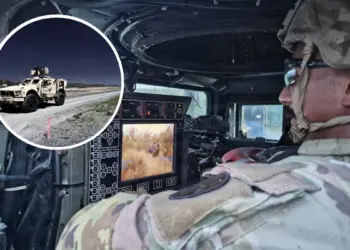
Officially released images show Marines working with explosive modules and configuring FPV drones in a controlled environment. This highlights a systematic shift toward the use of relatively low-cost but effective unmanned platforms operated directly by personnel at the tactical edge.
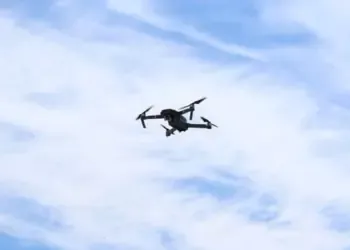
The Neros Archer platform used during the training is a compact FPV drone designed for manual, real-time control. It provides onboard video transmission and enables precise guidance of munitions onto targets, making it suitable for tactical operations where accuracy is a primary requirement.
In recent years, the U.S. Marine Corps has increasingly reassessed the role of small unmanned systems. This shift follows analysis of their large-scale use in modern conflicts. As a result, the service has accelerated updates to training programs, doctrine, and unit-level integration processes, where drones can be employed for reconnaissance, strike missions, and rapid target detection.
In addition to combat-related aspects, the course at Camp Pendleton also covers logistical considerations. Marines are trained in battery management, spare parts handling, and procedures for rapid drone reconfiguration in field conditions. Equipment kits prepared during the training included tools, batteries, and additional components, underscoring the program’s emphasis on operator autonomy and operational flexibility in combat environments.
Read also:
- Mission Control: How Ukraine Is Building a Unified Digital Brain for Drone Warfare
- MQM-172 Arrowhead: Overview of a Versatile Loitering Munition Drone
Source: defence-blog