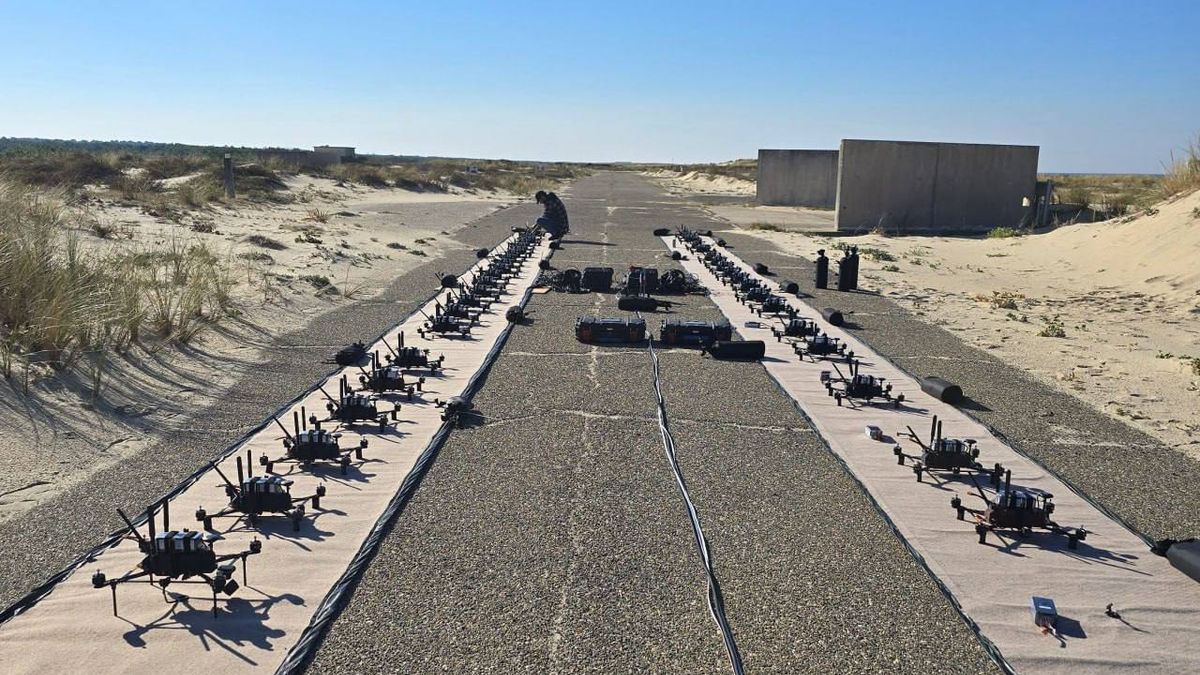
Ukraine is deploying a “drone wall.” Developed by the European firm Atreyd, the system is intended to intercept high-threat Russian aerial munitions before they reach cities and civilian infrastructure. According to Atreyd’s founder, the drone wall consists of dozens of small unmanned aircraft capable of shooting down incoming hostile munitions in flight. The system has already been shipped to Ukraine, and developers expect it to be deployed within the coming weeks.
If fielded as planned, this would represent the first operational use of this defensive concept in real combat conditions, potentially providing Ukraine with an additional layer of protection against intensified Russian air attacks. Initially the drone wall is expected to protect population centers and critical infrastructure from kamikaze drones; later, it could be moved closer to the front to attempt interception of guided glide bombs (KABs), which are substantially more difficult to defeat.

Russian Shahed-type drones and winged glide bombs represent some of the most serious threats to Ukraine. They are inexpensive, produced in large numbers, and cause significant damage. Kamikaze drones can be launched in mass salvos that deplete air-defence resources, while glide bombs can strike from long ranges outside the engagement envelopes of many Ukrainian air-defence systems. Their flight profiles, low radar cross-section and speed make interception very difficult.
To counter these threats, NATO ran an Innovation Challenge in March, inviting Ukrainian and Western defence companies to present solutions. The “drone wall” concept proposed by Atreyd was selected as a finalist in that competition.
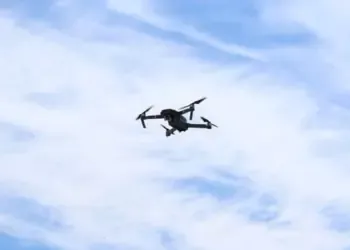
The system consists of FPV drones launched from ground-based platforms as soon as radar detects an incoming threat. Each drone carries a small explosive charge and is powered by a battery. Once airborne, the drones form a kind of aerial curtain, creating a barrier. When an enemy munition approaches, the drones detonate near it, neutralizing the target. “We see ourselves as the last line of defence,” says Atreyd’s founder.
The system is controlled by artificial intelligence, which dynamically adjusts the shape of the “wall” to match the trajectory of the incoming object. It is also relatively inexpensive – intercepting a single target costs only a few thousand dollars. If a drone does not detonate, it can return to its platform and be reused in future missions.
Atreyd notes that the “drone wall” can operate even without GPS. The drones are equipped with a preloaded 3D map of the designated area, allowing them to function in environments with active electronic warfare. They can fly at altitudes of several thousand meters and use recognition technology to avoid friendly fire. Although the system is autonomous, an operator can intervene and press a stop button if necessary. After brief training, a single operator can control around a hundred drones.
According to an Atreyd representative, the “drone wall” achieved a 100% success rate during testing, but its deployment in Ukraine will be the first real trial under combat conditions. The system can be used to protect cities, energy infrastructure, and other civilian areas that are regularly subjected to attacks.
For security reasons the developer will not disclose the system’s exact deployment location in Ukraine, but says it will remain there on a permanent basis and could be scaled in future using domestically produced drones. The Ukrainian variant will initially operate from ground stations while the company develops automated launch platforms.
Russia is upgrading its drones and glide bombs with jet propulsion – significantly increasing flight speeds and complicating air-defence tasks – but Atreyd maintains the drone-wall concept should remain effective against these newer threats. The company already holds a contract with a NATO member for launch platforms and drones. Production lines currently operate in France and Ukraine, with plans to expand manufacturing to the United States.
Read also:
- Gamified “Drone Army Bonus System” Goes Viral Among Ukrainian Troops
- Sweden May Partially Finance Gripen Fighter Deal for Ukraine
Source: businessinsider’