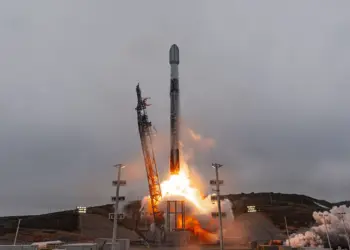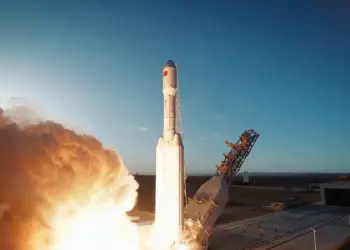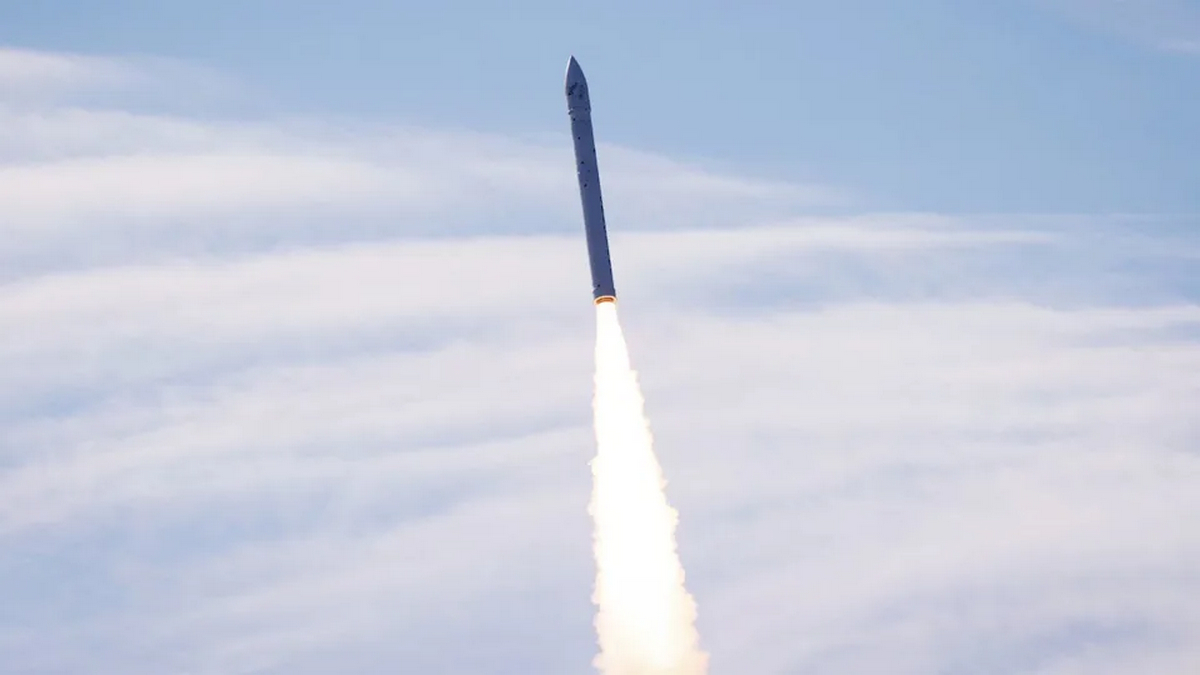
The third launch attempt of a small carrier rocket developed by a Japanese private company ended in failure shortly after liftoff on March 4, casting doubt on the rocket’s future. The Kairos rocket lifted off from Spaceport Kii, located in southern Honshu, at 21:10 JST (04:10 Kyiv time). This was already the third attempt: the first, scheduled for February 28, was postponed due to weather, and the second, planned for March 3, was canceled because of a safety system issue.

The solid-fuel rocket lifted off from the launch pad and initially appeared to be operating normally. However, about 70 seconds after liftoff, a significant anomaly became visible in the exhaust plume. Following this, several fragments were observed, including a large piece that rotated as it fell.
In a social media statement, Space One, the company managing the Kairos project, said it activated the rocket’s emergency flight termination system after determining that the likelihood of a successful mission was low. The company has not yet released detailed information about the technical issue that prompted the decision to abort the flight.
This accident marks the third unsuccessful launch attempt of the Kairos rocket. The vehicle is designed to deliver up to 150 kg of payload to a sun-synchronous orbit. The first Kairos launch, which took place in March 2024, failed just a few seconds after liftoff and was accompanied by a significant explosion. Space One later explained that the failure was caused by insufficient thrust from the first-stage engine, prompting the rocket’s emergency flight termination system to automatically destroy the vehicle.
The second Kairos launch took place in December 2024. During that flight, about 90 seconds after liftoff, the rocket likely lost orientation control. Space One concluded that the issue was caused by a failure in the thrust vector control system, which adjusts the engine nozzle’s position. This malfunction led to uncontrolled rotation of the rocket.
During the third launch attempt, the rocket carried five small satellites developed by Japanese companies and organizations, as well as the Taiwan Space Agency.
The repeated failures have raised serious questions about the future of both the Kairos rocket and Space One. Major Japanese corporations, including Canon and IHI Aerospace, are among the project’s investors. Despite the setbacks during the first two launches, Space One, in partnership with Space BD, secured a contract from Japan’s Ministry of Defense in May 2025 to launch a small Earth observation optical satellite.
This incident represents another setback for Japan’s space industry, which has recently faced a series of failures. The country’s main H3 rocket experienced a launch failure in December. Preliminary investigations linked the problem to the payload fairing separation stage. The shock generated during this process likely damaged both the upper stage of the rocket and the satellite, causing the payload to separate prematurely.
The smaller Epsilon rocket remains grounded following a launch failure in October 2022. The Epsilon program has also faced technical challenges with its upgraded solid-fuel engines, which failed twice during static ground tests in July 2023 and November 2024. Due to these issues, in October 2025 the Japan Aerospace Exploration Agency (JAXA) decided to purchase two Electron rocket launches from Rocket Lab to deploy satellites that had originally been scheduled for Epsilon launches.
Read also:
- All About Starship V3: Technological Platform for the Next Spaceflight Era
- Second Consecutive Failure of India’s PSLV Launch Results in the Loss of 16 Satellites
Source: spacenews