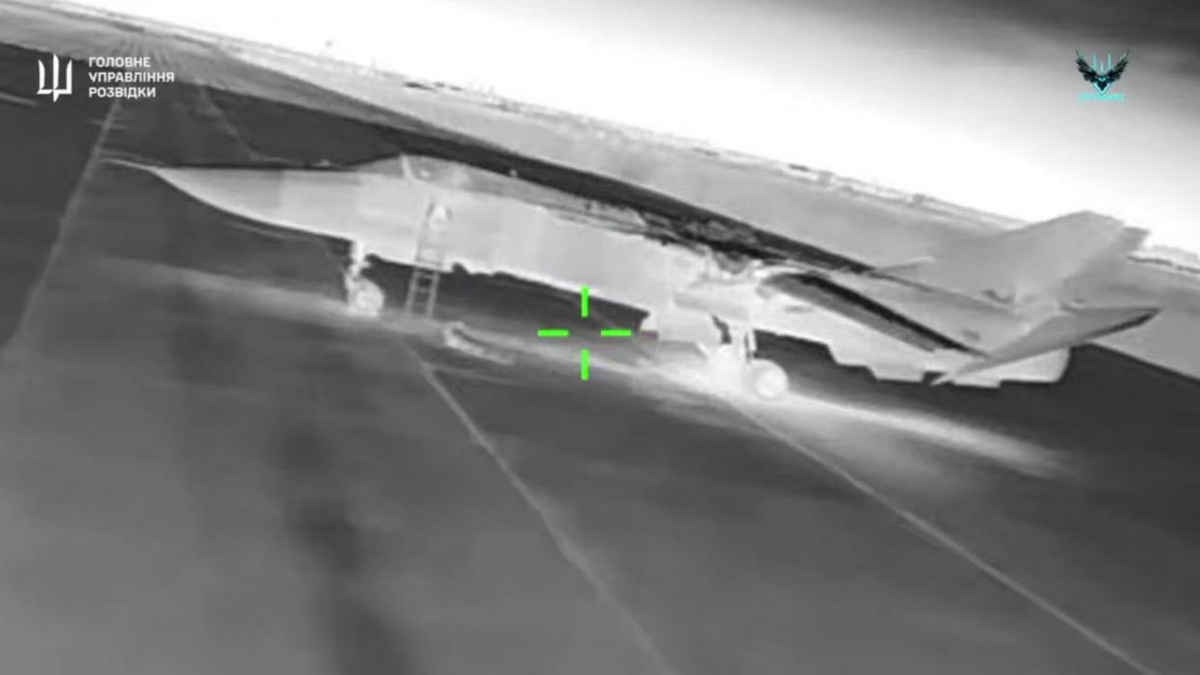
In recent weeks, special forces of the Defence Intelligence of Ukraine, operating under the codename “Prymary,” have carried out a series of high‑precision strikes on enemy targets in temporarily occupied Crimea. Over the past two weeks, they have successfully conducted at least eight targeted attacks on key elements of Russia’s military infrastructure.

This information comes from a statement released by the official press service of Ukraine’s military intelligence. According to the data provided, unmanned aerial vehicles operated by the special unit struck several important enemy targets. These included a frontline Su‑24 bomber, an antenna structure housed in a specialized radar‑transparent protective casing, and a modern 39N6 radar system, known as the “Kasta‑2E2.”
In addition, an enemy Orion UAV and two other 48Ya6-K1 “Podlyot” radar systems, designed for air target detection, were struck. The list of destroyed targets also includes a military cargo train and a Ural truck used by Russian units on the peninsula.
&pp=ygUH0LPRg9GAINIHCQklCgGHKiGM7w%3D%3D
To demonstrate the effectiveness of these operations, Defence Intelligence released a series of videos showing drones striking enemy targets. The footage highlights the precision and efficiency of each strike carried out during the operation.
It is worth noting that just a few days earlier, on December 4, the same “Ghosts” unit successfully targeted a Russian MiG‑29 fighter stationed at the “Kacha” military airfield in occupied Crimea. This incident was also confirmed and documented on video.
The “Prymary” unit demonstrates a high level of training and technical capability in carrying out operations within enemy-controlled territory. Their actions significantly undermine Russia’s defensive capabilities in the region and create additional risks for the logistics and deployment of enemy forces on the peninsula.
Read also:
- Ukrainian Interceptor Drone Downs a Russian Jet‑Powered Shahed for the First Time
- Weapons of Ukraine’s Victory: Magic 2 Air-to-Air Missile
Source: GUR