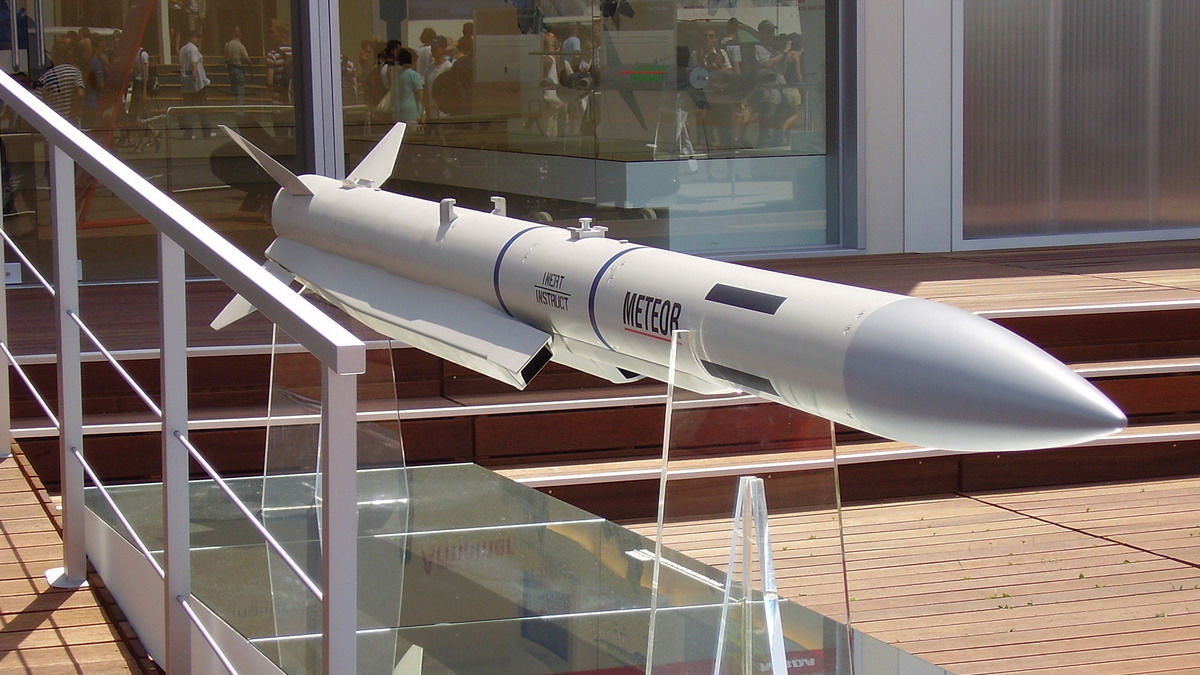
The United Kingdom and France have agreed to begin joint development of a next-generation air-to-air missile, intended to eventually replace the Meteor, one of Europe’s most advanced long-range missiles. The agreement includes a 12-month collaborative study during which both parties will assess future threats in aerial combat and identify the technologies required to maintain air superiority in the coming decades, according to the UK government.

As part of this initiative, new missile concepts will be explored, and a potential roadmap for further development will be established. The effort is part of broader measures under the updated Lancaster House 2.0 agreement, aimed at strengthening defense cooperation between the two countries.
UK Defence Secretary Luke Pollard stated that, in the face of emerging challenges, the country is deepening collaboration with allies and partners. He described the agreement as an important step forward, reinforcing the strength of the UK–France defense partnership.
The Meteor missile, which entered service in 2016, is currently operated by six European nations and deployed by the Royal Air Force on Typhoon fighters and by the French Air Force on Rafale aircraft. Developed through international cooperation, it is widely regarded as a benchmark of effectiveness among long-range air-to-air missiles.
The new study will build on this experience, focusing on coordinating industrial efforts and avoiding duplication within European defense programs. Pollard also noted that collaboration with France on next-generation missile development will strengthen NATO capabilities and enhance security across Europe.
This initiative is part of the renewed “Entente Industrielle” framework between the United Kingdom and France, designed to improve the efficiency of developing complex weapon systems and reinforce NATO’s advantage in high-tech aerial combat.
As part of this approach, a joint Complex Weapons Portfolio Office is also planned. This office will coordinate missile development programs, align national priorities, and create opportunities for other partner nations to participate in these projects.
Read also:
- Rafale for Ukraine: What Kind of Aircraft Is It and What Could It Mean?
- Weapons of Ukraine’s Victory: Magic 2 Air-to-Air Missile
Source: ukdefencejournal