According to information from five knowledgeable sources, U.S. military leadership has integrated Ukrainian-developed counter-drone technologies over the past several weeks at a strategically important air base in Saudi Arabia.
The move is linked to an urgent need to counter a series of attacks that resulted in damage to infrastructure, destruction of aircraft, and the death of at least one U.S. service member. The deployment of the Ukrainian Sky Map command-and-control system at Prince Sultan Air Base – previously unreported in media – highlights Ukraine’s significant progress in drone warfare and counter-drone systems developed during four years of full-scale conflict with Russia.

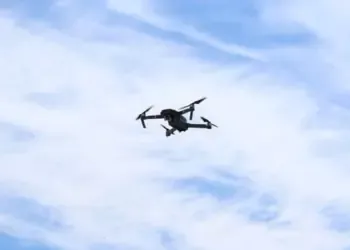
Recently, Ukrainian military specialists arrived at the site with the purpose of training U.S. personnel in the use of the Sky Map platform. The system is actively used by the Armed Forces of Ukraine for identifying airborne threats, including Iranian-origin “Shahed”-type drones, and for coordinating counterattacks using interceptor drones.
Against the backdrop of large-scale drone usage in the war in Ukraine, the Pentagon has significantly increased funding for counter-drone capabilities. However, the deployment of Ukrainian software at Prince Sultan Air Base – located approximately 640 km from Iran – highlights perceived gaps in U.S. air and missile defense coverage. Analysts, including Timothy Walton of the Hudson Institute, describe limited global air-defense coverage as a long-standing issue that has not been fully addressed.
The reported introduction of Ukrainian systems comes about a month after public comments attributed to Donald Trump rejecting an offer from Volodymyr Zelenskyy for assistance in countering Iranian drone threats, stating that the United States does not require external support in this area.
CENTCOM, the White House, and the Pentagon have not issued official comments. Sky Fortress, the company associated with Sky Map, and the Office of the President of Ukraine have also not responded to inquiries. Meanwhile, the Pentagon’s Joint Interagency Task Force 401 announced $350 million in funding for strengthening defenses under Operation “Epic Fury,” noting that there is no universal solution effective against all drone types.
Sky Map has reportedly established itself as a key operational command-and-control tool within the Ukrainian armed forces. The platform functions as a digital interface combining mapping and video feeds, aggregating data from multiple radar systems and sensor networks into a unified operational picture.
The developer, Sky Fortress, was founded in 2022 by Ukrainian engineers with links to defense-related circles. The company deployed more than 10,000 acoustic sensors across the country to detect incoming aerial threats. The project also received support from Ukraine’s defense innovation cluster, Brave1.
At Prince Sultan Air Base, Sky Map is described as operating alongside other systems under evaluation or deployment. These include Merops interceptor systems developed by the U.S.-based Project Eagle, a company associated with former Google CEO Eric Schmidt. Testing of these systems has reportedly encountered operational issues; earlier this month, one interceptor lost control and crashed into a utility structure on the base.
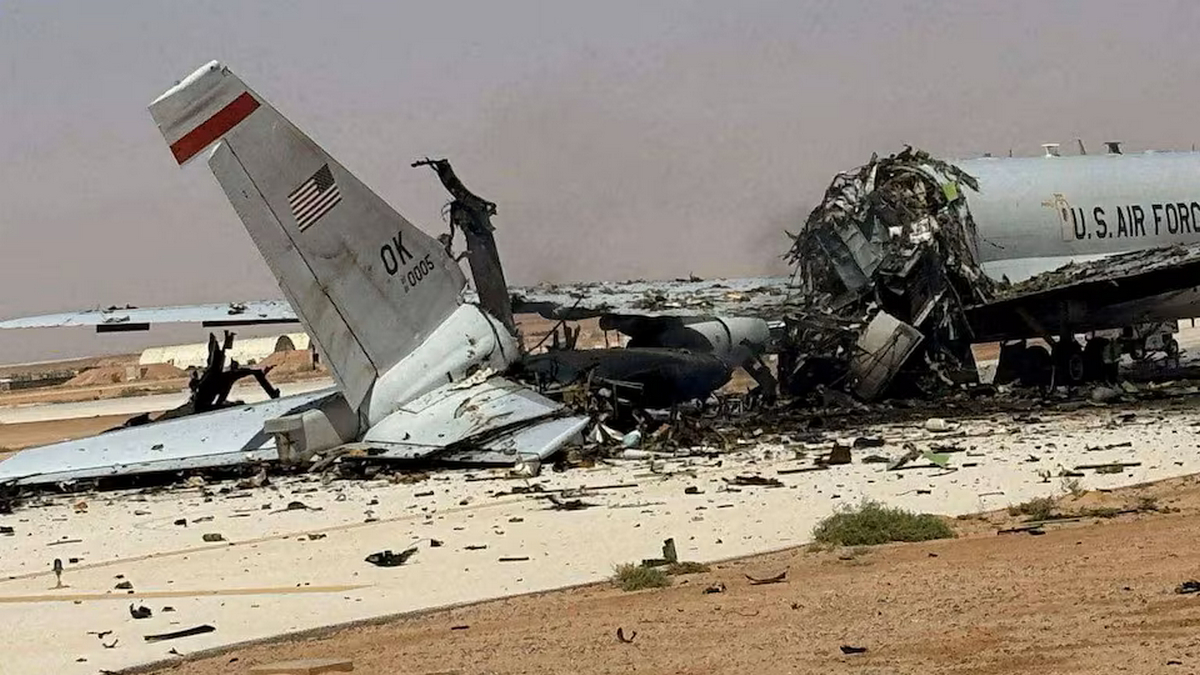
The increased focus on air defense capabilities follows a series of large-scale drone and missile attacks on the installation. Reports state that on 27 March, an E-3 Sentry (AWACS) aircraft was destroyed, while several KC-135 tankers were damaged. Additional claims include damage to infrastructure supporting THAAD missile defense operations.
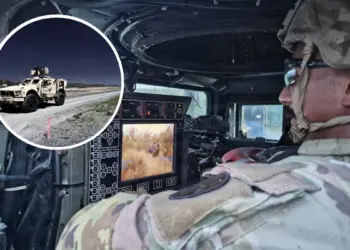
For protection of the facility, the FAAD system developed by Northrop Grumman is also used. The system dates back to the 1990s and provides target tracking capabilities ranging from mortar rounds to unmanned aerial vehicles (UAVs). For short-range counter-UAV engagement, Coyote interceptors produced by RTX are employed. These systems can operate as kinetic interceptor drones or, in some configurations, use microwave-based effects to disrupt an adversary’s electronics. According to statements from representatives of the manufacturers, both FAAD and Coyote systems are described as having undergone testing in operational conditions and are presented as meeting their intended performance requirements.
Read also:
- Ukraine’s Defense Industry Demonstrated Its Capabilities: Highlights from Armorer’s Day Exhibition
- Weapons of Ukraine’s Victory: The “Shvidun” Interceptor Drone
Source: reuters