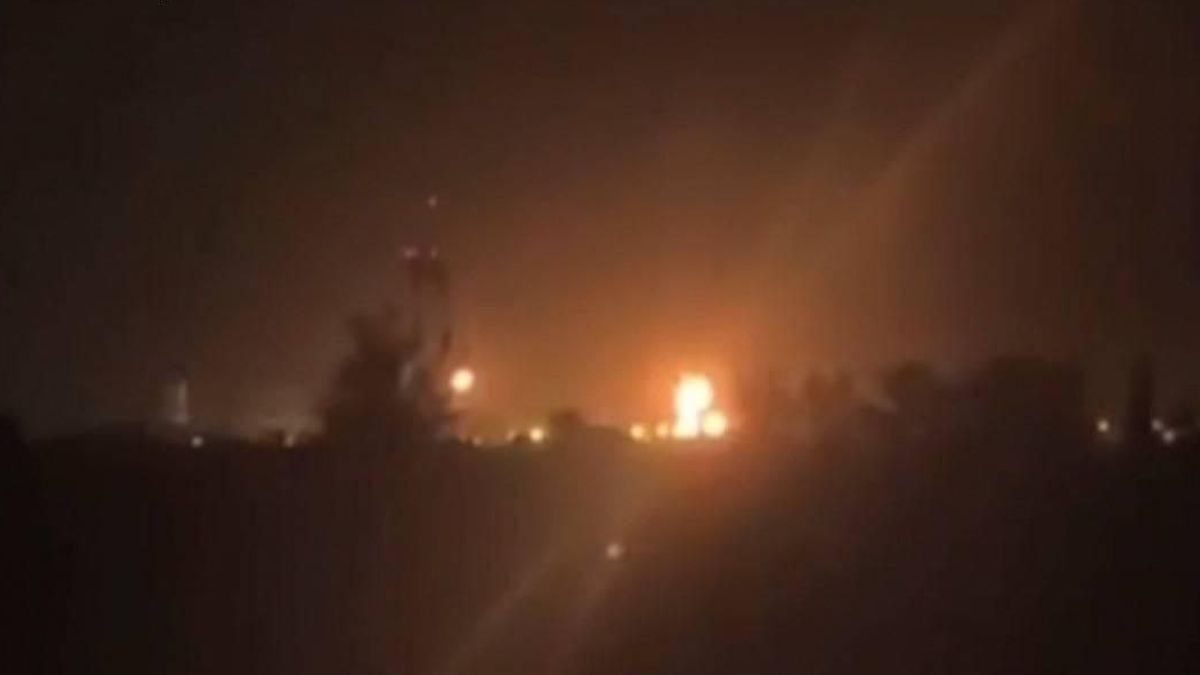
In order to reduce the enemy’s offensive potential and complicate fuel supplies to Russian military units, Ukraine’s Unmanned Systems Forces, in coordination with other branches of the Defense Forces, struck several key facilities of the Russian aggressor. One of the targets was the Novoshakhtinsk oil refinery in Russia’s Rostov region. The attack took place on the night of August 21.
According to an official statement on the Facebook page of the Unmanned Systems Command of the Armed Forces of Ukraine, the Novoshakhtinsk refinery is one of the largest in southern Russia. “Its design capacity reaches up to 7.5 million tons of crude oil per year, and the capacity of its tank farm exceeds 210,000 cubic meters,” the statement said. “The plant produces gasoline, fuel oil, marine, heating and diesel fuel, and directly supplies the needs of the Russian armed forces.”

Robert “Madyar” Brovdi commented that, according to Wikipedia, this refinery – the largest fuel distribution facility in southern Russia, supplying the Russian military – belonged to Viktor Medvedchuk until 2021. “He sold it just in time,” Brovdi noted.
The strike triggered powerful explosions at the refinery. Data from NASA’s FIRMS satellite monitoring system confirmed a large fire in the area of the storage tanks.
This wasn’t the only target struck by Ukrainian drones. A hit was also recorded near a fuel and lubricants depot used by Russian forces in Russia’s Voronezh region, with the results of the strike still being assessed.
According to Ukraine’s General Staff, a drone storage site and a logistics hub were also hit in the temporarily occupied city of Donetsk. The military confirmed direct hits and multiple explosions in the area.
As a reminder, we recently reported that Brave1 participant Omnitech, together with the 3rd Assault Brigade, developed a unique AI-powered drone. The UAV, named “Pavuk Dophin”, outperforms most foreign counterparts. Its main task is to provide uninterrupted communication for strike drones operating deep behind enemy lines. Thanks to AI algorithms, it can autonomously secure itself in position, ensuring a stable and protected communication channel.
Read also:
- Member of Ukraine’s Brave1 Defense Innovation Cluster Developing Air-to-Air Class Air Defense System
- Japan Shows Interest in Turkish Drones Following Their Success in Ukraine
Source: facebook