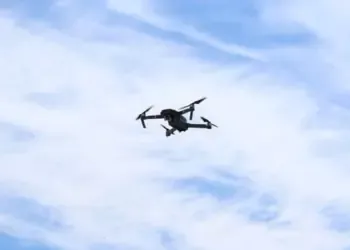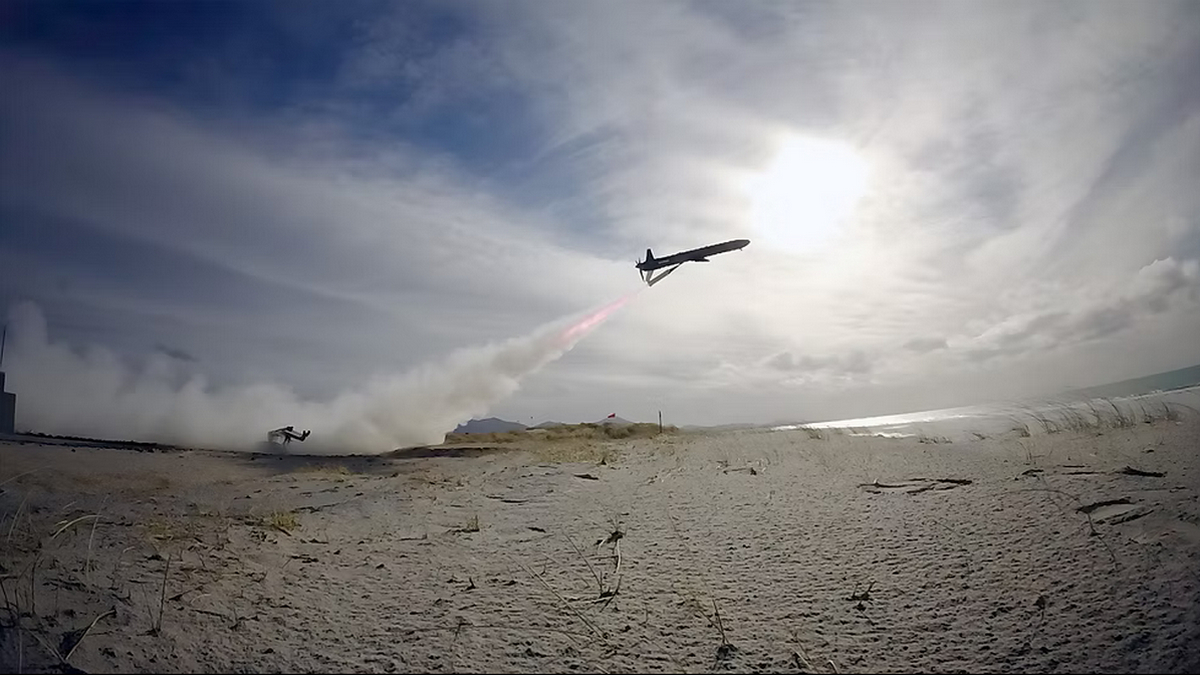
British company Rotron Aerospace has successfully conducted flight tests of its autonomous strike platform SkyLance, marking a notable step in the global development of low-cost, long-range loitering munitions for NATO forces and partner countries.
During the demonstration, the performance of the propulsion system and flight control systems was confirmed. Company representatives stated that SkyLance is capable of operating in environments with active electronic warfare and radio-frequency interference, delivering precision payloads over long distances. However, specific details regarding payload capacity and operational range have not been disclosed. These tests reflect a broader trend of increasing Western investment in unmanned systems, as military planners look for more cost-effective alternatives to traditional missile systems. The development of long-range drones has become a priority for NATO following analysis of lessons learned from the war in Ukraine.
The timing of the tests coincides with the recent acquisition of Rotron Aerospace by the U.S.-based group Ondas Holdings, which is listed on Nasdaq. The new owner plans to significantly scale up the British developer’s production capacity and expand its presence in international markets. The partnership is intended to position the SkyLance system for participation in European defence procurement programs and potential export to allied countries. SkyLance is designed as a single-use strike platform, a category commonly referred to as a loitering munition or “kamikaze drone.” It is intended for missions where armed forces require relatively low-cost, expendable systems capable of engaging targets deep in enemy territory, serving as an alternative to more expensive cruise missile systems.

A distinctive feature of the SkyLance system is its proprietary propulsion unit, developed in the United Kingdom. Rotron Aerospace claims that this design offers improved endurance and efficiency compared to conventional piston or turbine engines, while maintaining relatively low operating costs, which is a key factor for large-scale deployment. The system is also intended to address a major challenge in modern warfare: vulnerability to electronic warfare. The war in Ukraine has demonstrated how systems relying solely on GPS navigation can lose effectiveness under jamming conditions.
To mitigate this, SkyLance is equipped with autonomous navigation and guidance capabilities that allow it to operate in environments where GPS signals are fully denied. The platform is also designed to integrate with reconnaissance networks, reducing the time between target detection and engagement. Alex Head, CEO of Rotron, emphasized the company’s intent to rapidly scale production in response to growing defence demand. He stated that the successful tests confirm the platform’s ability to deliver long-range, cost-effective solutions for modern combat scenarios, and that cooperation with Ondas Holdings will help accelerate manufacturing output.
The strategy of deploying low-cost strike systems is becoming increasingly common among defence planners. These drones are significantly cheaper than conventional missiles, allowing armed forces to conduct large-scale operations without depleting high-value munitions stocks. This segment has expanded rapidly following Ukraine’s demonstrated use of long-range UAVs against Russian military infrastructure, which highlighted their operational effectiveness at scale. As a result, Western defence companies are increasingly competing to develop systems that balance range, survivability, and affordability.
Rotron Aerospace states that SkyLance aligns with current NATO requirements for distributed long-range strike capabilities along Europe’s eastern flank. The company argues that the system could support protection of critical infrastructure and enable responses to emerging threats while keeping operational costs relatively low. The successful test marks an initial milestone on the path toward potential procurement contracts. Analysts expect demand for autonomous strike platforms to grow over the next decade, as Western countries continue to invest in scalable and adaptable combat systems.
Read also:
- The Era of AI Killers: Combat-Proven Ukrainian Hornet Drones Destroy a Simulated Chinese Fleet in the Philippines
- Weapons of Ukraine’s Victory: FP-1 – A Drone Capable of Reaching Moscow
Source: interestingengineering