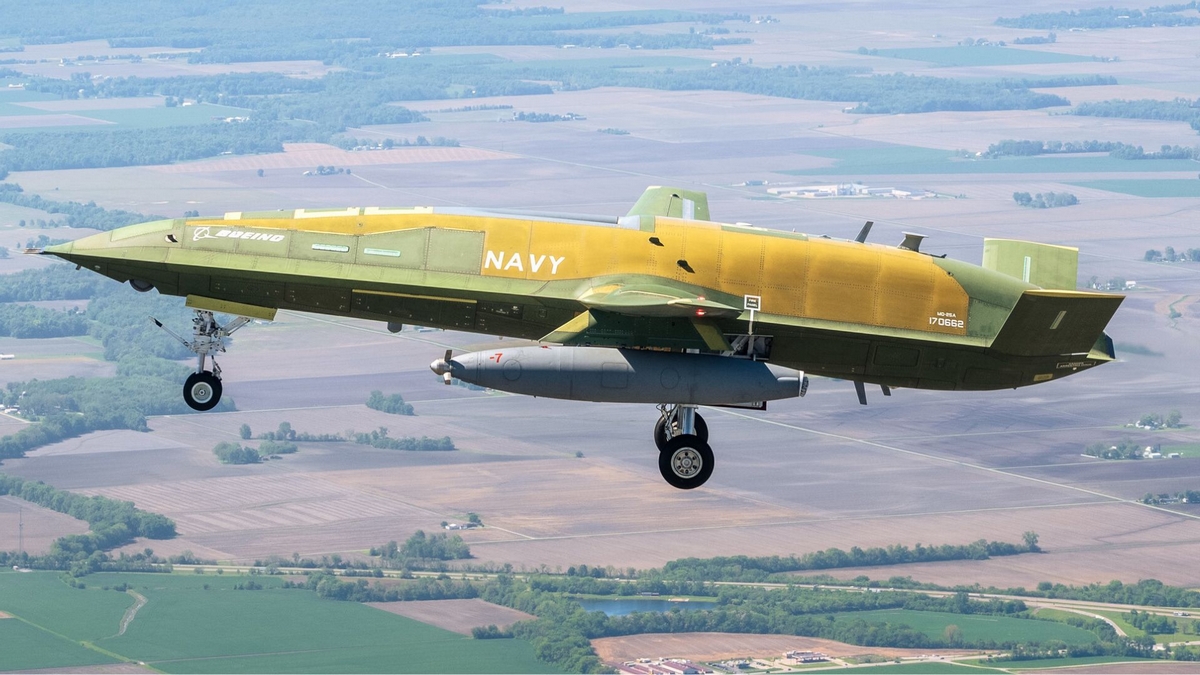
Boeing and the United States Navy have taken a step toward integrating unmanned aviation into carrier-based operations. The MQ-25A Stingray completed its first operational test flight, marking a notable milestone for naval aviation. The program is intended to expand the capabilities of U.S. carrier strike groups and reduce the operational burden on crewed fighter aircraft.
The two-hour mission was conducted at MidAmerica St. Louis Airport. It reflects growing confidence in autonomous systems designed for the demanding conditions of aircraft carrier operations. The test also aligns with a broader United States Department of Defense strategy to integrate crewed and uncrewed platforms into a unified operational framework.
During the flight, the MQ-25A Stingray demonstrated fully autonomous operation. The aircraft independently performed taxiing, takeoff, flight, and landing without direct pilot intervention. Operators used the Unmanned Carrier Aviation Mission Control System MD-5 to supervise the mission, issuing commands and monitoring system performance throughout. After takeoff, the Stingray followed a predefined flight path. The test confirmed the functionality of its flight control, navigation, and command integration systems.
“This successful flight builds on years of experience gained with the MQ-25A T1 prototype and demonstrates a high level of program maturity,” said Dan Gillian, Vice President and General Manager of Boeing Air Dominance. “The MQ-25A is one of the most complex autonomous systems developed for carrier operations, and this milestone brings us closer to its safe integration into the carrier air wing.”

The MQ-25A Stingray introduces a new aerial refueling capability for the United States Navy. It is intended to assume the tanker role currently performed by F/A-18 Super Hornet aircraft. This shift allows Super Hornets to focus on combat missions while extending the operational range of carrier air wings.
“The first flight of the MQ-25A is a significant achievement for the Navy–Boeing team and an important step toward the future of carrier aviation,” said Tony Rossi. “This test demonstrates progress in developing a carrier-based refueling system that will expand range and enhance the fleet’s operational capabilities.”
The aircraft is a key element in the Navy’s unmanned aviation roadmap and supports broader efforts to integrate autonomous systems into advanced operational environments.
Boeing will continue flight testing in Illinois, after which the aircraft will be transferred to Naval Air Station Patuxent River. This phase is intended to prepare the MQ-25A Stingray for carrier-based operations.
The MQ-25A is the first of four Engineering Development Model (EDM) aircraft being built under an $805 million contract awarded in 2018. In addition to aerial refueling, the platform is designed to support surveillance and reconnaissance missions as part of a broader operational framework.
“Seeing our first Navy aircraft complete an autonomous flight reflects disciplined teamwork and a structured test program,” said Troy Rutherford, Vice President of the Boeing MQ-25 program. “This milestone is the result of sustained effort by Boeing, the Navy, and industry partners, and it advances the integration of autonomous systems into naval aviation.”
The aircraft is powered by the Rolls-Royce AE 3007N. Additional engines of the same type are planned for use in both testing and series production. As the test program expands, the MQ-25A Stingray is moving closer to certification for carrier-based operations, which will define its role in future activities of the United States Navy.
Read also:
- Thousands of Drones for the Frontline: Ukraine and Norway Agree on Joint Production
- Old Aircraft, New Weapons, New Tactics: Ukraine Is Redefining Counter-Drone Warfare
Source: interestingengineering