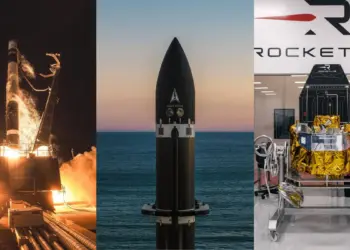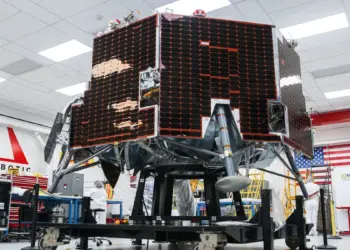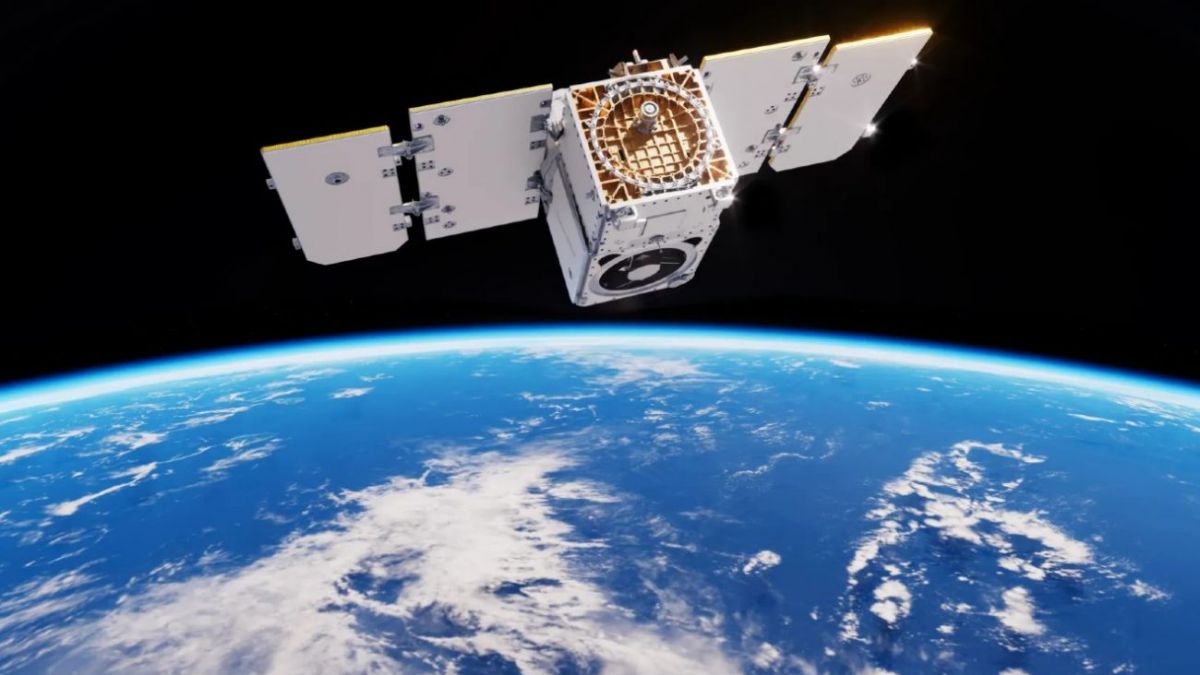
Sweden has launched its first military reconnaissance satellite aboard a SpaceX Falcon 9 rocket from Vandenberg Space Force Base. The satellite was built by Planet Labs. The Swedish Armed Forces plan to deploy approximately ten satellites in the coming years, aiming to achieve initial operational capability significantly earlier than the original 2030 target.
The satellite was placed into low Earth orbit by the Falcon 9 launch, marking an important milestone for Sweden’s space-based defence capabilities and advancing the program ahead of schedule.

The satellite was built by Planet Labs and operates in low Earth orbit, capturing high-resolution imagery that the Swedish Armed Forces will use to monitor their area of operations, including regions that have historically been difficult or impossible to observe. Among these is the Arctic, an area of growing strategic importance where NATO allies have sought to maintain continuous surveillance capabilities.
Rear Admiral Anders Sondén, Commander of the Swedish Armed Forces’ space operations, was present at Vandenberg Space Force Base during the launch. He also used the visit to meet with the U.S. Space Force and U.S. Space Command, highlighting the alliance dimension of Sweden’s new capabilities as they enter operational use.
In an official statement from the Swedish Armed Forces, Sondén described the launch in direct terms: “Our expansion into the space domain has progressed at record speed. We now have national capability and our own systems in space. This gives us a better picture of our area of operations, including hard-to-monitor regions such as the Arctic and areas we were previously unable to observe. This creates better conditions for Sweden’s and NATO’s defence capability, and strengthens our ability to detect and counter threats at long range,” he said.
The satellite programme has moved from concept to operational reality significantly ahead of its original target date of 2030, according to the Swedish Armed Forces. This acceleration was made possible through close cooperation with the Swedish Defence Materiel Administration (FMV), responsible for procurement, as well as the Swedish Defence Research Agency (FOI). The combination of institutional coordination and focused execution reduced timelines that comparable national space programmes might measure in decades to a much shorter period, a point emphasized by the Swedish military as evidence of rapid implementation.
Planet Labs, a California-based Earth observation company whose satellite constellation has been widely used for both commercial and government applications, manufactured the spacecraft. The use of a commercial satellite producer and a commercial launch provider – SpaceX’s Falcon 9 rocket, which has become a workhorse for Western military and governmental satellite launches – reflects a procurement approach that prioritizes speed and proven capability over building a fully domestic industrial base.
For a country that only recently joined NATO and is rapidly expanding its defence posture across multiple domains, this approach is strategically pragmatic. Establishing a domestic satellite production capability from scratch would likely have pushed the timeline well beyond the 2030 target, rather than accelerating it.
The Swedish Air Force’s space division has also begun establishing a Space Operations Center, an operational command hub for the Swedish Armed Forces’ space capabilities. This center will be responsible for building a space situational awareness picture and managing Sweden’s satellite constellation. It is not merely an administrative addition; it represents the institutional infrastructure required to translate raw satellite imagery into actionable military intelligence and to integrate that intelligence into NATO’s broader operational picture, of which Sweden is now formally a member.
Read also:
- Mysterious Anomaly in Orbit: SpaceX Loses One Starlink Satellite
- NATO intelligence warns that Russia is exploring the possibility of attacks on Starlink satellites
Source: defence-blog