• • CONTACTS
  • • PRIVACY POLICY
  • • GADGETS & TECHNOLOGIES
AERONAUT.media
  • NEWS:
  • • Aviation
  • • UAVs & drones
  • • Flying weapon
  • • Space
  • ARTICLES
  • Language:
  • EN
  • UA
No Result
View All Result
  • NEWS:
  • • Aviation
  • • UAVs & drones
  • • Flying weapon
  • • Space
  • ARTICLES
  • Language:
  • EN
  • UA
No Result
View All Result
AERONAUT.media
No Result
View All Result
Home News Space news

The End of a Long Space Journey: Scientists Predict When and Where a Falcon 9 Upper Stage Will Impact the Moon

Svitlana Anisimova by Svitlana Anisimova
23/07/2026
in Space news
0
SpaceX Falcon 9
1
SHARES
13
VIEWS

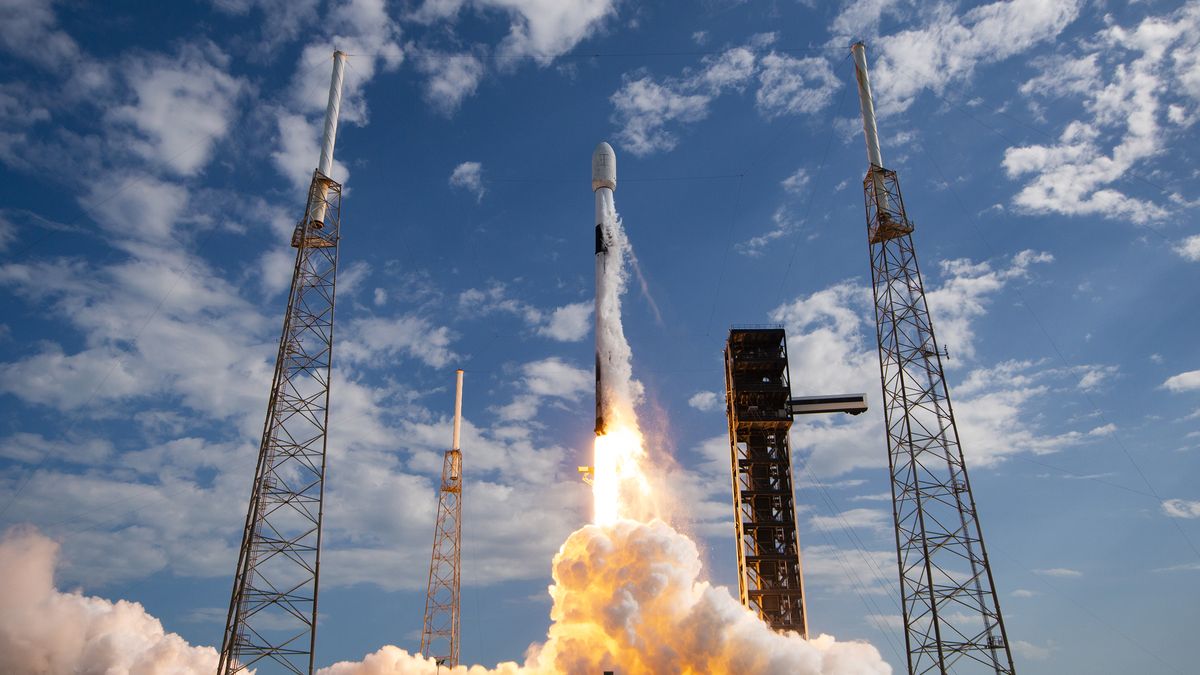
Astronomers may soon witness an unusual celestial event that could be observable from parts of Earth using ground-based telescopes. The upper stage of a SpaceX Falcon 9 rocket is expected to collide with the Moon on August 5 at approximately 09:35 Kyiv time (2:35 a.m. ET). The impact is predicted to occur near Einstein crater. The projected date and impact location were calculated by Bill Gray, the developer of the Project Pluto software, who used available tracking data to model the rocket stage’s orbit and forecast its trajectory.

SpaceX Falcon 9 Moon

The upper stage expected to impact the lunar surface is the one left over from the SpaceX launch that carried the Firefly Blue Ghost mission on January 15, 2025. During that mission, a Falcon 9 delivered Firefly Aerospace’s Blue Ghost lunar lander and ispace’s Hakuto-R lunar lander into space. After deploying both spacecraft, the rocket stage exhausted its remaining propellant and was unable to perform a controlled return, leaving it to drift through space.

The upper stage is approximately 12 meters long, 4 meters in diameter, and has a mass of around 4,000 kilograms. It is expected to strike the Moon at a speed of roughly 8,750 km/h. According to a research paper by Bill Gray and his colleagues, the impact is not expected to produce any significant consequences. Although the Falcon 9 upper stage is larger than most natural objects that collide with the lunar surface, it is essentially a hollow metal structure traveling at a relatively low impact velocity by cosmic standards. It is expected to break apart on impact, creating a crater approximately 20 to 30 meters in diameter while ejecting a substantial plume of lunar dust.

SpaceX Falcon 9

This is precisely what astronomers will be watching. The event offers a rare opportunity to observe a lunar impact in real time, allowing researchers to study how dust and ejecta are displaced following the collision. The observations could also improve understanding of the hazards posed by impacts involving space debris. The impact is expected to be most visible from South America and from low- and mid-latitude regions of North America. Viewing conditions will depend largely on the Moon’s position in the sky at the time of impact – the higher it is above the horizon, the greater the chances of observing the event through ground-based telescopes.

Read also: From a Kamikaze Drone to a Cruise Missile Carrier: Ukraine Unveils a New Version of the An-196 “Liutyi” UAV

Source: engadget

Tags: NewsSpace probesSpaceX
ShareTweetShareShareShareSharePin
Previous Post

Optical Illusion at Work: New Drone Can Appear Invisible While Flying

Svitlana Anisimova

Svitlana Anisimova

I'm addicted to books and stationery, and love everything with flour, sugar, and the hate-to-love trope. Have a lot of guilty pleasures for one girl, and don’t feel guilty about it.

RelatedPosts

Rocket Lab VICTUS HAZE
Space news

Rocket Lab Secretly Deployed a Military Inspector Satellite into Orbit for the Pentagon

24/06/2026
208
SpaceX Starfall
Space news

SpaceX to Send Revolutionary Starfall Cargo Capsule into Orbit

23/06/2026
405
SpaceX Falcon 9
Space news

SpaceX Dominance: Elon Musk’s Company Has Launched More Satellites into Orbit Than the Rest of the World Combined

23/06/2026
345
Spark Space Jinhua-1
Space news

Electric-Powered Record Breaker: China Develops the Largest Electric Rocket in History

19/06/2026
399
Astrobotic Griffin-1
Space news

A New Step Toward Lunar Exploration: Astrobotic Presents the Griffin-1 Lander

16/06/2026
102
Artemis III
Space news

NASA Selects Veteran Astronauts for Artemis III Mission

10/06/2026
336

Leave a Reply Cancel reply

Your email address will not be published. Required fields are marked *

Subscribe

  • Bluesky
  • Facebook
  • Mastodon
  • RSS
  • Twitter

Recent Comments

  • Andrij Kharuk on Weapons of Ukraine’s Victory: ALTO NG training aircraft
  • BotArYu on Weapons of Ukraine’s Victory: ALTO NG training aircraft
  • BotArYu on Turbojet Breakthrough from Türkiye: Everything You Need to Know About the TAI Hürjet Trainer and Light Combat Aircraft
  • Haley Knudsen on Month of Silence and Uncertainty: European Space Agency Reestablishes Contact with Proba-3 Spacecraft
  • JoeRonamo on Tomahawk Cruise Missiles – What You Need to Know

Recent Posts

  • The End of a Long Space Journey: Scientists Predict When and Where a Falcon 9 Upper Stage Will Impact the Moon
  • Optical Illusion at Work: New Drone Can Appear Invisible While Flying
  • Russia’s Aviation Pride Falls: Advanced Fighter Jet Crashes in Moscow Region
  • Aircrafts That Never Existed: The CASA AX Training and Combat Aircraft
  • More Than 4,100 Hours in the Air: Single-Engine Beechcraft Denali Moves Closer to Certification

Help this site

SWITCH LANGUAGE:

  • EN
  • UA
  • • CONTACTS
  • • PRIVACY POLICY
  • • GADGETS & TECHNOLOGIES

© 2024-2026 AERONAUT.media

No Result
View All Result
  • NEWS:
  • • Aviation
  • • UAVs & drones
  • • Flying weapon
  • • Space
  • ARTICLES
  • Language:
  • EN
  • UA

© 2024-2026 AERONAUT.media