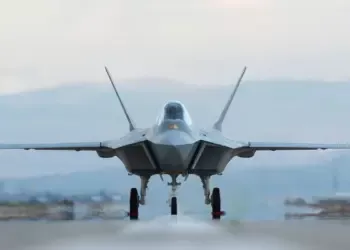
Rapid progress on the F-47 program became possible thanks to the groundwork laid under the classified NGAD X-Plane projects. Boeing has already begun production of the first prototype of the sixth-generation fighter for the U.S. Air Force. Speaking at a briefing ahead of the 2025 Dubai Airshow, Boeing Defense, Space & Security head Steve Parker emphasized that the experience gained from building and testing those prototypes allowed the new aircraft to enter the production phase far faster than expected. He called winning the Next Generation Air Dominance program a pleasant surprise and added that the current pace of work confirms the maturity of the design concept.

In March, U.S. President Donald Trump announced Boeing as the winner of the competition to develop the crewed NGAD fighter. The initiative also includes the development of Collaborative Combat Aircraft strike-class drones, new engines, electronic warfare systems, networked capabilities, and advanced weapons. Parker declined to comment on the timeline for the first flight – preliminarily set by the Air Force for 2028 – but noted that the program is being executed at a high level and is progressing according to plan.
The U.S. Air Force has stated its intention to purchase at least 185 F-47 aircraft, a figure that may be adjusted depending on future strategic needs. Parker also highlighted the contribution of the Phantom Works division, which was responsible for key elements of the project and continues to play a leading role in developing new generations of combat aviation.
One of the key factors speeding up the program was a series of classified demonstration flights. According to DARPA estimates, Boeing’s and Lockheed Martin’s XPlane aircraft logged several hundred hours of testing. It is known that at least one demonstrator flew as early as 2019, with additional prototypes joining the program in 2022. These aircraft were experimental and did not replicate the final production design of the F-47, but they provided engineers with critical data that enabled a rapid transition to the manufacturing phase.
Parker also stated that the F-47 embodies an approach aligned with Pete Hegseth’s new concept for accelerated defense procurement. Boeing invested substantial internal resources into developing infrastructure in St. Louis, which allowed the company to begin scaling up production almost immediately after securing the contract.
Boeing is simultaneously preparing to compete for the U.S. Navy’s next-generation fighter program. The published FAXX concept renders feature noticeable similarities to earlier F-47 design studies, although the actual appearance of the future combat aircraft remains classified. What is known is that the F-47 will offer a combat radius of more than 1,000 nautical miles, speeds exceeding Mach 2, very low observability across a broad spectrum, and the ability to control unmanned systems during combat missions.
Amid China’s accelerating fighter development and concerns over a shrinking U.S. tactical aviation fleet, the F-47 program is viewed as a key pillar of America’s future air dominance. The Air Force expects the first flight by the end of 2028, and Boeing maintains that progress is steady and remarkably fast.
Read also:
Source: TWZ