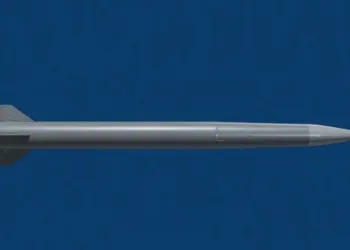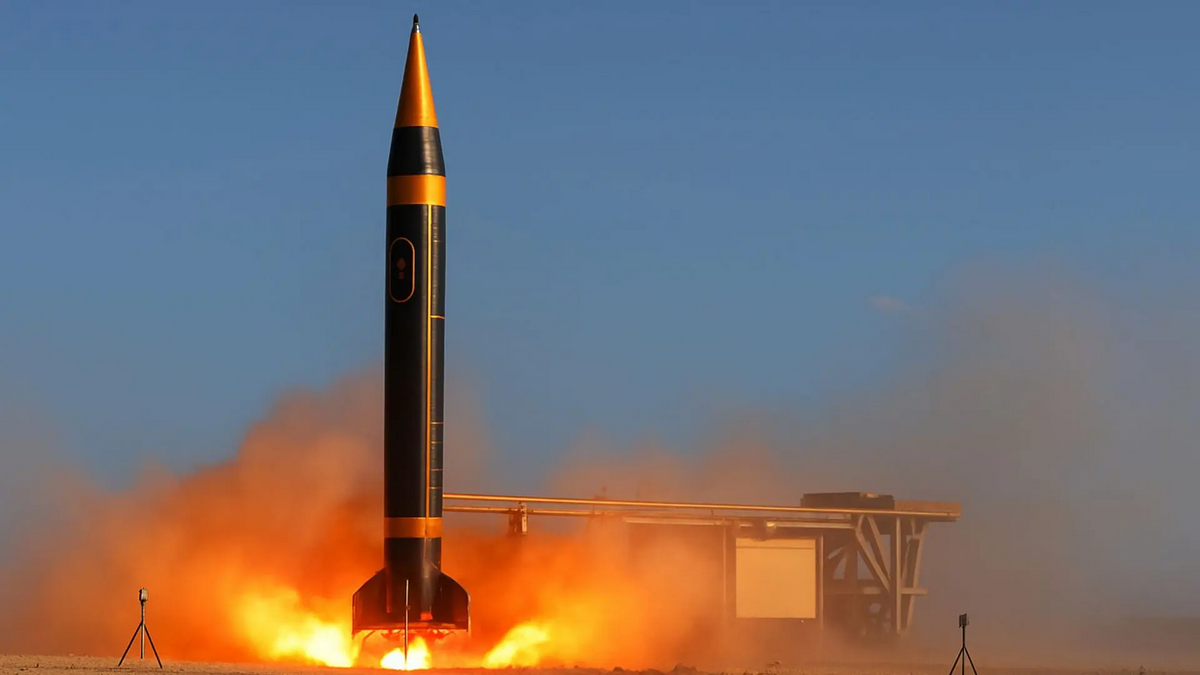
The UK government has announced the launch of the Nightfall project, which предусматриває the development of a new deep-strike ballistic missile intended to strengthen Ukraine’s defensive capabilities in the war against Russia. Nightfall is structured as a competitive program focused on the rapid development of a ground-launched ballistic missile. The system is expected to carry a 200 kg warhead to a range exceeding 500 km and to be operable in high-threat environments with significant electromagnetic interference.
According to the UK government’s plans, these tactical ballistic missiles are intended to substantially expand Ukraine’s strike capabilities and enable engagement of key Russian military targets. Missiles developed under the Nightfall project are expected to be produced at a relatively high rate – up to ten units per month – with a unit cost capped at approximately $1,075,420 per missile.
A press release from the UK Ministry of Defence states that the missiles will be capable of being launched from multiple types of vehicles, conducting rapid salvo launches, and leaving the firing position within minutes. According to officials in London, this approach is intended to allow Ukrainian forces to strike key military targets before Russian forces are able to carry out a retaliatory attack.

The project envisages awarding three industrial teams contracts worth $12 million each to design, develop, and deliver the first three missiles within 12 months for flight testing. Nightfall places primary emphasis on rapid prototyping, spiral development, resilience to electronic warfare, and the ability to quickly scale production, including manufacturing within the United Kingdom.
While the project is primarily intended to support Ukraine, it is also meant to lay the groundwork for future long-range strike programs for the UK Armed Forces. The Nightfall requirements have already been communicated to potential industry partners under non-disclosure agreements. The deadline for proposal submissions is February 9, 2026, with contract awards planned for March 2026.
It is worth noting that last week Russia employed the Oreshnik ballistic missile, which is assessed as being capable of carrying a nuclear warhead, in a strike against targets in the Lviv region. The impact area was located approximately 40 km from the Polish border. This marked only the second confirmed use of this missile system. The first recorded launch occurred in 2024 during an attack on the central part of the city of Dnipro. Moscow claimed that the Oreshnik launch was a response to an alleged Ukrainian attack on the residence of President Vladimir Putin, a claim that was denied by the Ukrainian side.
The Oreshnik is described by Russian sources as a medium-range ballistic missile capable of reaching hypersonic speeds, which significantly complicates interception by air and missile defense systems. In addition, its warhead is reported to be capable of fragmenting during the terminal phase of flight, increasing the affected area.
UK Defence Secretary and Member of Parliament John Healey commented that the recent night-time attacks by Russia “demonstrate Putin’s belief in his own impunity and a willingness to strike civilian areas using advanced weapons.” He stated that, in his view, Moscow continues to escalate the conflict rather than pursue meaningful steps toward peace. Healey added that the United Kingdom remains committed to providing Ukraine with modern weapon systems to improve its ability to defend against such attacks.
Minister for Defence Readiness and Defence Industry Luke Pollard added: “A secure Europe requires a strong Ukraine. New British long-range missiles will help Ukraine continue its resistance and will add further pressure on Putin.”
Ukraine, for its part, is also developing its own ballistic missile capabilities. In particular, the short-range ballistic missile Sapsan was formally inducted into service in 2025 under the designation 1KR1. According to official statements, the system has entered serial production and is already being used operationally.
Read also:
- United States Conducts Real-World Testing of Autonomous Valkyrie Combat Drones
- Weapons of Ukraine’s Victory: Tempest Air Defense System with AGM-114L Longbow Hellfire Missiles
Source: Interestingengineering