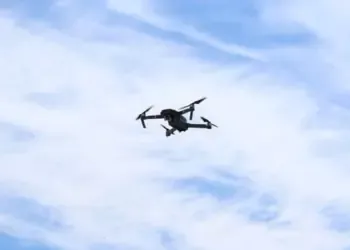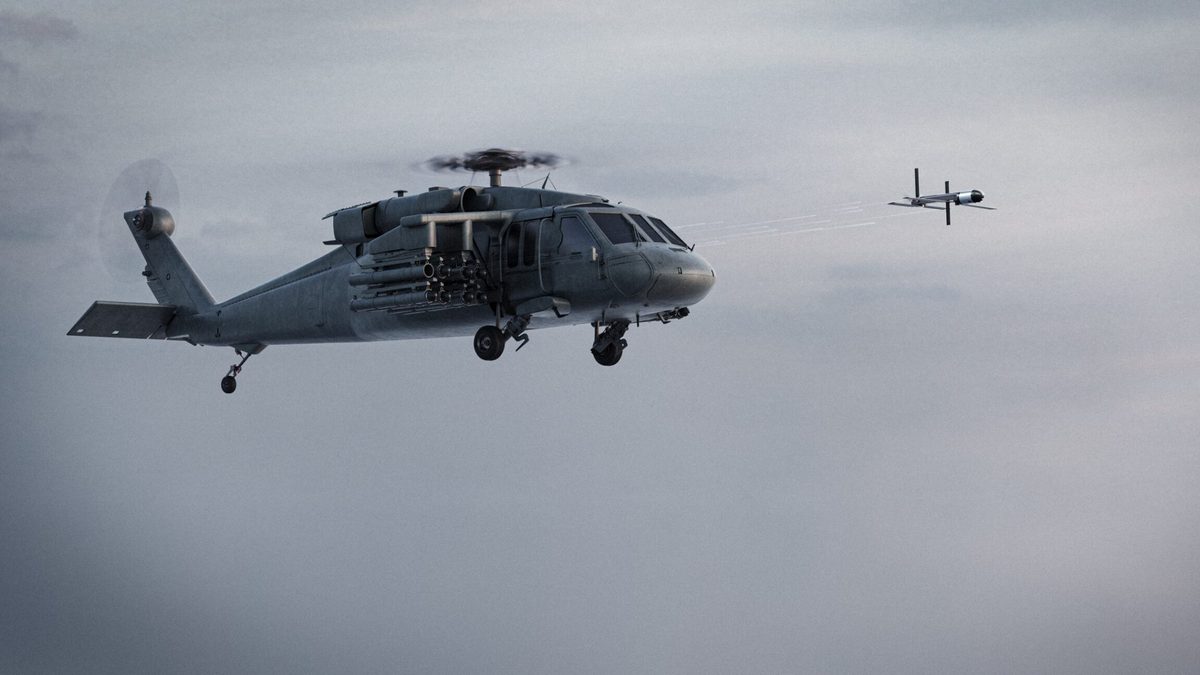
A U.S. defense company has presented a new autonomous modular drone capable of performing surveillance, electronic warfare, communications relay, and strike missions within a single system. The MAYHEM 10 platform developed by AeroVironment is based on a modular payload concept, allowing rapid reconfiguration of the aircraft’s role depending on battlefield conditions, combining both lethal and non-lethal capabilities.
The introduction of this system is considered timely, as the U.S. Army is currently accelerating the adoption of remote systems to extend operational range, increase firepower, and improve unit survivability in complex combat environments. AeroVironment CEO Wahid Nawabi stated that the combination of advanced autonomy, multi-domain payload capacity, and rapid adaptability enables forces to detect targets, disrupt adversary operations, and deliver precise strikes even in heavily contested environments.

The MAYHEM 10 system builds on concepts from the Switchblade drone family, with an emphasis on high autonomy and the ability to operate at extended ranges in high-risk environments. The platform can carry up to 4.5 kg of payload, has a flight range exceeding 100 km, and can remain airborne for up to 50 minutes. Deployment time is under five minutes, enabling rapid operational readiness.
From a technical standpoint, MAYHEM 10 is based on a modular, open-architecture design that facilitates upgrades and integration of third-party systems. Control is handled via the Tomahawk Grip controller and the AV_Halo COMMAND interface, which support swarm operations. This allows multiple units to operate in coordination, expanding coverage and enabling synchronized mission execution.
The design includes a detachable front section that enables rapid role changes, ranging from reconnaissance and electronic warfare to decoy deployment or precision strike missions. The system can be launched from air, ground, or naval platforms, increasing operational flexibility while reducing risk to personnel.
With integrated AI capabilities, the drone is intended to maintain functionality even in contested environments involving signal jamming or GPS spoofing. Communication resilience is supported through M-Code GPS, Silvus data links, and a MANET networking architecture, which collectively maintain stable connectivity over distances of approximately 25 to 40 km.
AeroVironment positions MAYHEM 10 not as a single-use munition, but as a system designed for coordinated group operations. The platforms are intended to operate both individually and in swarms, with the goal of overwhelming enemy air defenses while simultaneously carrying out reconnaissance and strike tasks within a single mission profile. Autonomous control algorithms have already undergone laboratory testing in collaboration with Applied Intuition, although full-scale swarm flight demonstrations are still pending.
This distributed approach is intended to expand combat capability without concentrating high-value assets in a single location. The system is designed for mass production, with a projected output of up to 240 units per month. Initial low-rate production is expected to begin later this year, depending on demand. Although there are currently no official procurement orders from the Pentagon, the development aligns with the U.S. Army’s broader strategy of transitioning toward modular and distributed combat systems. This direction is further reflected in a recent $186 million contract awarded for next-generation Switchblade platforms.
Read also:
- Ukrainian Drones Strike Russian Air Defenses, Iskander Systems, and Oil Depots: 16 Targets Hit
- Skycutter Surprises Observers: How British–Ukrainian Team Won Drone Racing Competition in US
Source: interestingengineering