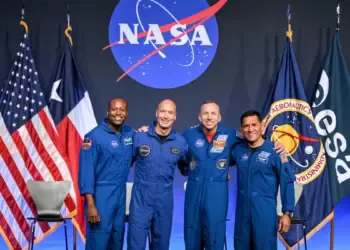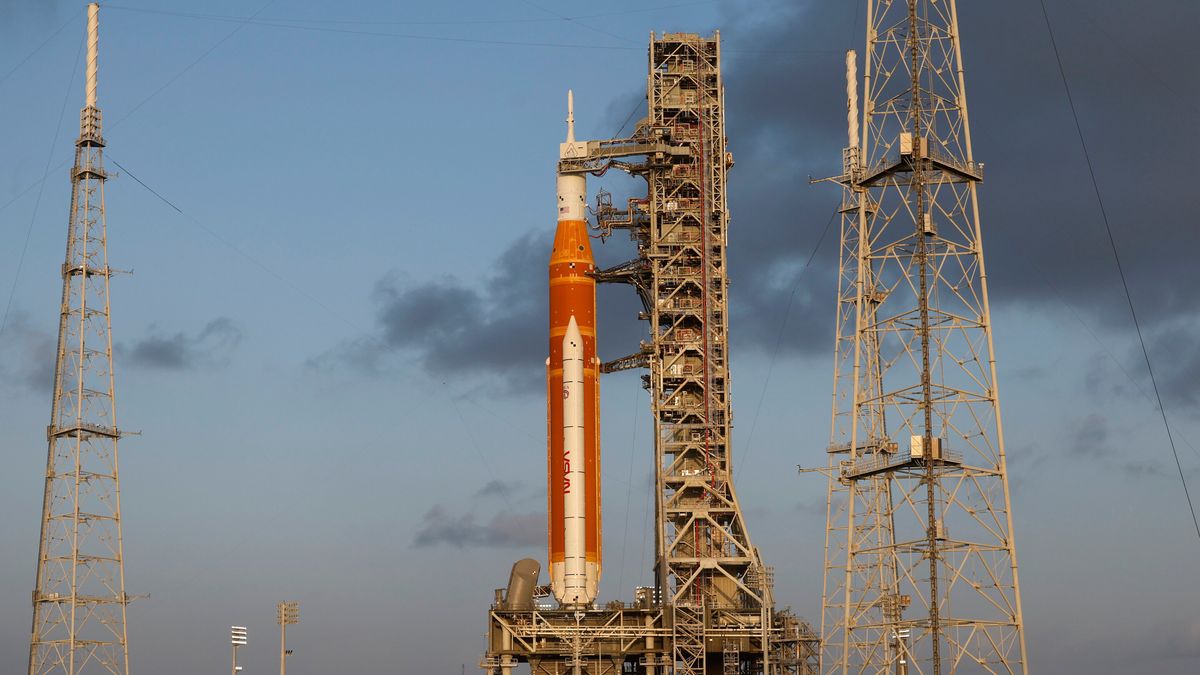
NASA has entered the final preparation phase for the first crewed lunar flight in 53 years, officially starting the countdown for the Artemis II mission. The launch is scheduled for the night of April 2 at 01:24 Kyiv time (22:24 GMT on April 1) and is expected to mark humanity’s historic return to lunar orbit after more than half a century.

The 32-story-tall Space Launch System rocket is ready for launch, carrying four astronauts on board. The crew will initially spend approximately one day in Earth orbit before the Orion capsule embarks on a round-trip journey to the Moon without any landings, performing only a flyby with a course reversal. The entire mission is expected to last nearly 10 days and will conclude with a splashdown in the Pacific Ocean.
“Our team has put in extraordinary effort to reach this point,” said launch director Charlie Blackwell-Thompson. “Everything indicates that we are in excellent – truly excellent – shape.”
The Artemis II mission was initially scheduled for February but was postponed due to hydrogen leaks. Once that issue was resolved, a helium feed line blockage was discovered, prompting the rocket’s return to the hangar at the end of last month. After completing all necessary repairs, the launch vehicle was returned to the pad about a week and a half ago, and the crew from the U.S. and Canada arrived at the space center on Friday.
Unlike the Apollo program, during which only men flew to the Moon between 1968 and 1972, the Artemis II crew is more diverse. Mission pilot Victor Glover noted that he hopes young people, seeing the team, will feel inspired and think, “Girl power is cool,” and that young boys and girls with darker skin tones will look at him and say, “Hey, he looks like me – what is he doing?” At the same time, Glover, who is Black, expressed anticipation for a future in which “we won’t have to talk about these firsts” and space exploration becomes a fully inclusive part of “humanity’s story.”
NASA has a launch window during the first six days of April. If the mission cannot be carried out within this period, the next opportunity will not arise until the end of the month. Currently, a recent major solar flare does not pose a threat to the planned launch, as space weather is expected to stabilize by the time the rocket is scheduled to lift off.
Read also:
- All About Starship V3: Technological Platform for the Next Spaceflight Era
- Month of Silence and Uncertainty: European Space Agency Reestablishes Contact with Proba-3 Spacecraft
Source: phys