New missions have been announced for the U.S. Space Force (USSF) and the National Reconnaissance Office (NRO), with a total value of $1.142 billion. According to the decision, SpaceX has been awarded five launch assignments, while United Launch Alliance (ULA) received two.
This marks the second year of orders (OY2) under the National Security Space Launch (NSSL) Phase 3 Lane 2 contract, which includes participation from three companies – Blue Origin, SpaceX, and ULA. Back in April, the USSF Space Systems Command officially named these three operators as winners of the second part of the Phase 3 procurement program.

SpaceX has been designated as the primary launch provider and is scheduled to conduct 28 missions between fiscal years 2025 and 2029. ULA has been named the secondary provider and will carry out 19 missions.
Blue Origin, selected as the third provider, was expected to receive seven missions under Phase 3, Lane 2 starting from OY2. However, since the company is still in the process of certifying its New Glenn rocket for national security missions, it did not receive any assignments in this round. Blue Origin will become eligible to participate in mission allocations beginning in fiscal year 2027. The second launch of the New Glenn rocket is currently expected in late October or early November.
“Space is the ultimate high ground and a critical domain for national security. The assignment of missions under NSSL Phase 3 Lane 2 this year allows us to maintain reliable access to that domain,” said Colonel Eric Zarybnisky, Program Executive Officer for Assured Access to Space. “Delivering capabilities to the warfighter is our primary objective, and we rely on a strong partnership between government and industry built on mutual trust, open communication, and technical excellence.”
The Assured Access to Space (AATS) program is part of the USSF Space Systems Command and is responsible for managing launch operations and providing orbital capabilities. The missions announced under this phase are scheduled for launch no earlier than fiscal year 2027.
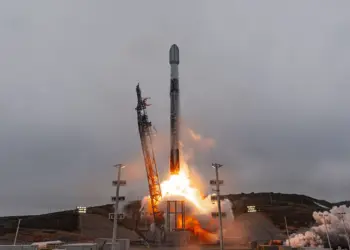
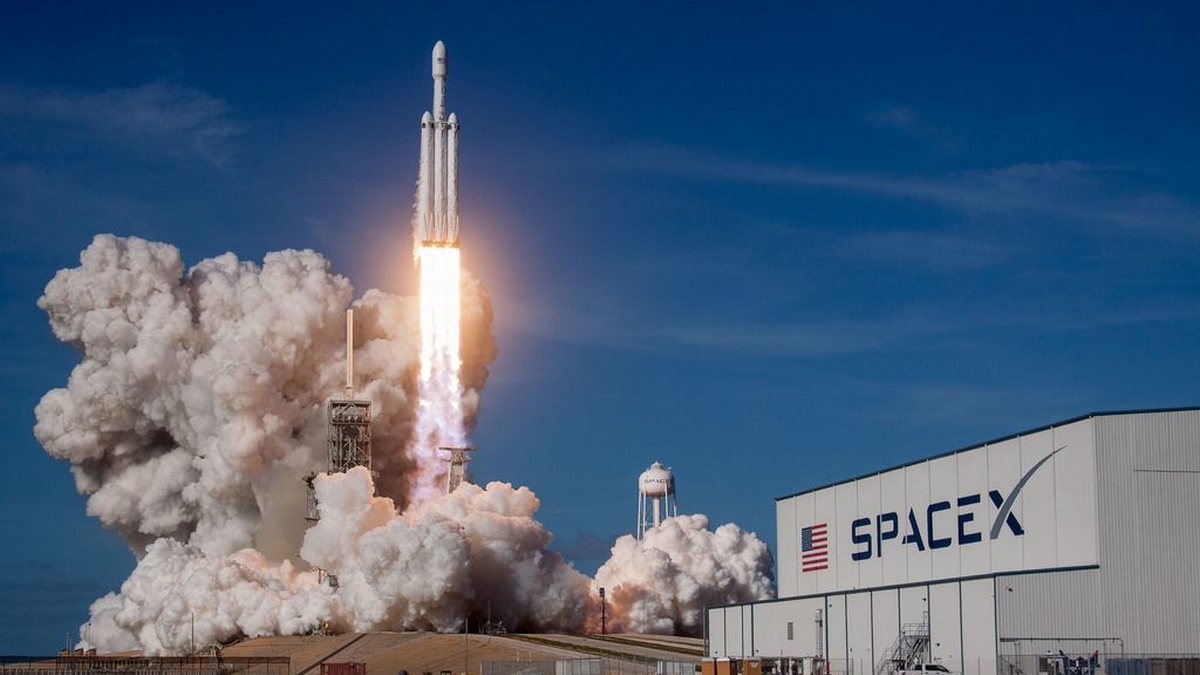
SpaceX will conduct five missions with a total value of $714 million, while ULA will handle two missions worth $428 million. All launches will take place from the Eastern Range. Following the announcement, Lieutenant Colonel Christina Stewart, materiel leader for SSC’s NSSL Integration Division, stated that most of SpaceX’s assigned missions will be carried out using the Falcon Heavy rocket. “All SpaceX missions identified under OY2 require the Falcon Heavy launch vehicle, except for the USSF-149 mission, which is planned to fly on Falcon 9,” Stewart noted.
ULA, meanwhile, will use its Vulcan rocket for the two assigned missions, although specific configuration details for these launches have not yet been disclosed. Most of the payloads scheduled for launch remain classified. These include missions USSF-63, USSF-149, USSF-155, as well as NROL-86 and NROL-88.
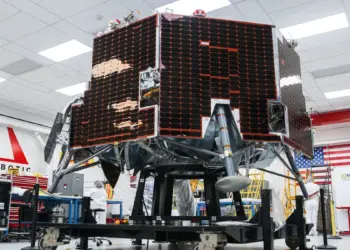
For mission USSF-206, the primary payload will be the Wideband Global SATCOM (WGS) satellite – the twelfth in its series of geostationary communications satellites. In March 2024, Boeing was awarded a $439.6 million contract to build the spacecraft. Its launch is planned aboard ULA’s Vulcan rocket, tentatively scheduled for 2025, though the exact date has not yet been determined.
“We are proud to be part of this mission and to continue providing reliable tactical communications for the armed forces,” said Michelle Parker, Vice President of Boeing’s Space Mission Systems division, in March 2024. “Like WGS-11, the twelfth satellite in the WGS series will deliver critical capabilities to our forces through more than 1,500 individually steerable and shapeable Ka-band beams, ensuring stable connectivity even in the most challenging conditions.”
Another confirmed payload is the GPS III Follow-on (GPS IIIF) satellite, which will be launched as part of the USSF-88 mission. This will be the fourth satellite of the next-generation GPS system developed by Lockheed Martin. Back in 2018, the U.S. Air Force awarded Lockheed Martin a $7.2 billion contract to design and produce 22 GPS IIIF satellites aimed at delivering improved accuracy, enhanced signal protection, and expanded capabilities for military users.
Source: Spaceflightnow