Russia has relocated some of its most advanced strategic nuclear bombers to within roughly 660 kilometers of U.S. territory. The move places these aircraft significantly closer to American borders, with the stated goal of protecting them from long-range drone strikes potentially tied to Ukrainian capabilities and Western intelligence support.
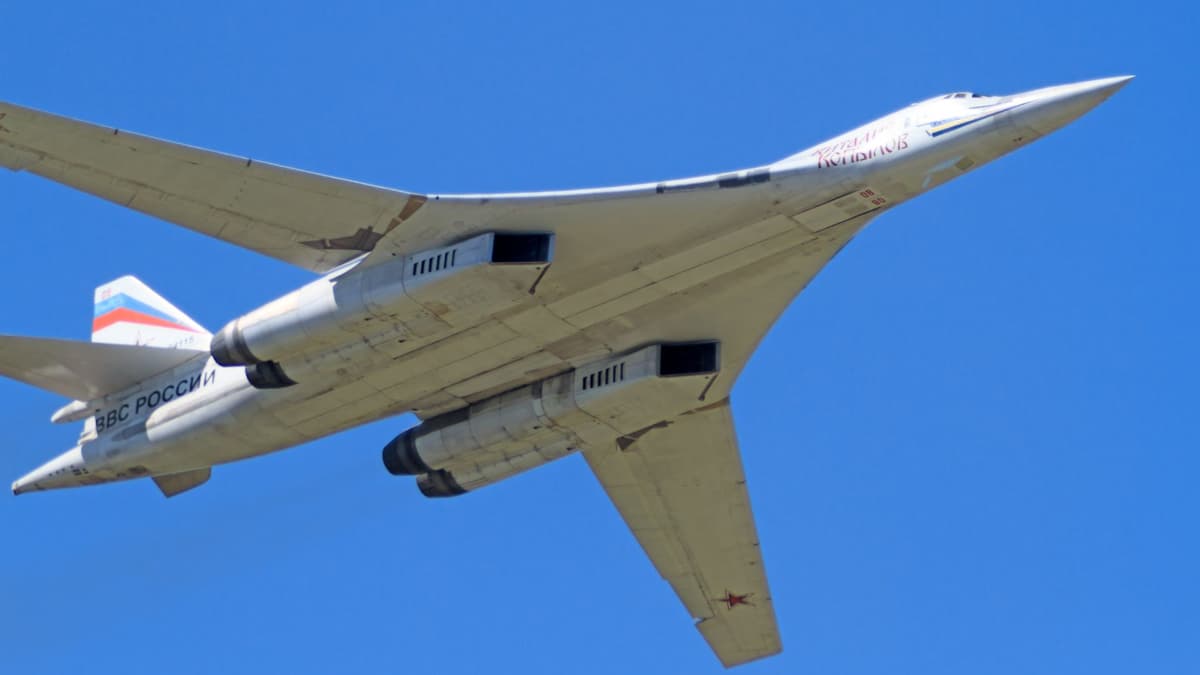
According to Defense Express, Tu-160 “Blackjack” bombers have been transferred to the Anadyr airbase in Russia’s Chukotka region, near the country’s Far Eastern coastline. The base is situated around 500 kilometers from Alaska. The relocation may signal growing uncertainty within Russia’s military leadership and an attempt to reposition key assets further from perceived vulnerabilities.

Satellite imagery has confirmed the redeployment, which analysts interpret as an effort to shield high-value airborne assets from potential strikes by long-range Ukrainian drones.
Russia’s decision to station Tu-160 nuclear-capable bombers closer to the U.S. may seem counterintuitive, as it effectively places key strategic assets near the borders of its primary geopolitical rival. Experts view this move as a short-term defensive measure rather than part of a coherent long-term strategy. It appears driven more by immediate concerns over vulnerability to evolving threats than by a consistent approach to deterrence or regional stability.
The Tu-160 heavy bombers – designated “Blackjack” by NATO – have recently been targeted by Ukrainian drones as part of Operation ”Spiderweb”, resulting in damage to multiple aircraft stationed at bases like Engels and Olenya. These incidents exposed significant vulnerabilities in Russia’s air defense systems and prompted military leadership to reassess the threat level facing its strategic aviation fleet.
At this stage, the Russian military appears to be prioritizing the preservation of its strategic bombers over their immediate operational readiness. Several aircraft have been relocated over 6,600 kilometers east to Anadyr Air Base – a remote facility with limited access and logistical support. The airfield, known as Ugolny, relies primarily on seasonal maritime deliveries and air transport, which poses challenges for sustaining long-term operations. Despite these constraints, Moscow seems to view this decision as justified, given the heightened risk of losing bombers to long-range drone attacks.
The relocation of strategic nuclear bombers to a position near U.S. airspace has drawn mixed reactions. On one hand, it may reduce the immediate threat posed by long-range Ukrainian drones. On the other, it increases exposure to U.S. surveillance and the risk of strikes in the event of escalating tensions. Analysts suggest the move reflects not strength, but rather strategic confusion and vulnerability within Russia’s military planning.
It’s increasingly clear that the Kremlin now views threats from Kyiv as more immediate and tangible than those posed by the U.S. – a shift that underscores the changing dynamics of the war against Ukraine.
The Tu-160, classified by NATO as “Blackjack,” is the world’s largest and fastest supersonic strategic bomber. Originally developed during the Cold War, this variable-sweep wing aircraft was designed to penetrate air defense systems at high speed and deliver both nuclear and conventional cruise missiles across long distances. Its payload includes up to 12 Kh-101 or Kh-55 cruise missiles, giving it a strike range of over 5,500 kilometers without the need for aerial refueling. The aircraft has a maximum takeoff weight of 275,000 kilograms, can reach speeds up to Mach 2.05, and has a combat radius exceeding 7,300 kilometers.
The Tu-160 has a payload capacity of up to 40,000 kilograms, making it the cornerstone of Russia’s strategic bomber fleet. Fewer than 20 of these aircraft are currently in active service with the Russian military, which significantly raises the value of each unit. This limited number is likely a key reason behind their relocation – despite the logistical challenges associated with maintaining operations at the Anadyr airbase.
This move highlights a shift in Moscow’s priorities. Rather than emphasizing global military reach, the current focus appears to be the preservation of critical strategic assets. It reflects a balancing act – between signaling deterrence and exposing operational vulnerability.
Source: Interestingengineering