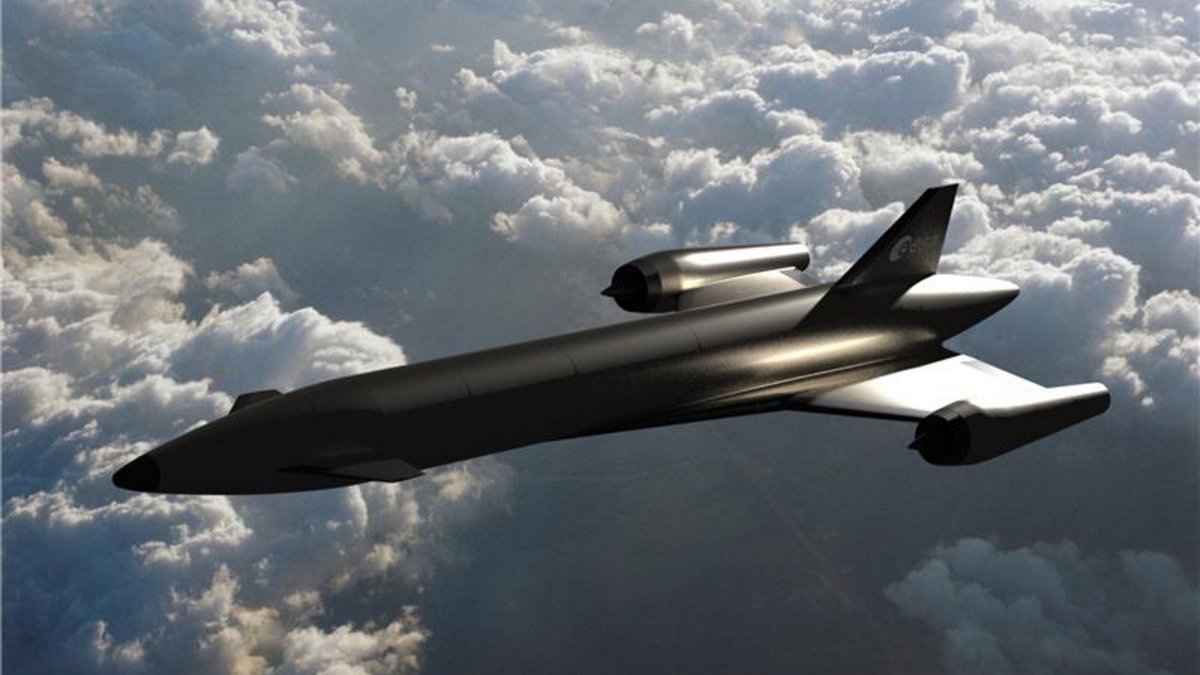
The European Space Agency (ESA), in collaboration with UK-based company Frazer-Nash, has launched a research initiative called INVICTUS, aimed at developing hypersonic technologies for future reusable vehicles with horizontal takeoff capabilities.
The project is funded through ESA’s General Support Technology Programme (GSTP) and the Technology Development Element (TDE). INVICTUS is an experimental reusable aircraft designed to fly at speeds up to Mach 5 – five times the speed of sound. Its main goal is to validate key technologies for sustained hypersonic flight within the atmosphere. The platform is also built with flexibility in mind, allowing for upgrades between test campaigns, including changes to materials, propulsion systems, and onboard software.

INVICTUS builds on ESA’s earlier research into hypersonic technologies and is expected to become a key platform for scientists, engineers, and industry partners seeking to conduct tests under conditions that closely resemble real-world scenarios. One of the most demanding challenges in hypersonic flight is managing extreme thermal stress – shock heating and intense air friction can cause severe overheating of both the vehicle’s surface and the airflow entering the engines. Addressing these issues requires the use of advanced materials, specialized cooling systems, and propulsion units capable of operating in such harsh conditions.
According to David Perigo, a chemical propulsion engineer at ESA and the program’s technical lead, INVICTUS will enable testing of a hydrogen-based propulsion system that uses precooled air for horizontal takeoff and sustained hypersonic flight. This setup will make it possible to evaluate the entire technological chain – from air intake to combustion – within the context of a functioning, real-world vehicle.
The cooling system at the heart of INVICTUS is based on technology originally developed by the UK company Reaction Engines Ltd as part of the SABRE project, which was supported by ESA under the GSTP program. This technology has already proven its ability to rapidly cool superheated air and has been successfully tested in combination with conventional jet engines. The lightweight design of the SABRE-type engine also opens the door to developing true spaceplanes – vehicles capable of horizontal takeoff from standard runways, potentially making access to space more practical and affordable.
Mark Ford, Head of Chemical Propulsion at ESA, described INVICTUS as a key step in the development of technologies needed for future spaceplanes. He emphasized that the project offers Europe a valuable opportunity to explore the operational principles of hypersonic flight in detail.
Sarah Wilks, CEO of Frazer-Nash, believes that the INVICTUS project opens up new possibilities for applying advanced technologies to both space missions and dual-use applications. With strong support from industry and the company’s long-standing engineering experience – particularly in propulsion – she says the team is well-positioned to bring this ambitious vision to life.
Tommaso Ghidini, Head of ESA’s Mechanical Engineering Department, added that hypersonic flight represents more than just the next step in aerospace development – it marks a shift toward a new paradigm in mobility, defense, and space transport. According to Ghidini, INVICTUS gives Europe an opportunity to take the lead in shaping technologies that could redefine how we move both on Earth and beyond. Mastering reusable air-breathing propulsion systems may ultimately enable the creation of vehicles that take off like conventional aircraft but reach orbit like rockets – laying the groundwork for a major transformation in terrestrial and space transportation.
Tony Forsyth, Head of Space Technology at the UK Space Agency, emphasized that this forward-looking project – supported by ESA funding – holds significant potential for the real-world application of advanced cooling systems and hypersonic engines developed by British engineers over many years. He also noted that the initiative opens up new opportunities for driving economic growth and enhancing national security.
Over the next year, the INVICTUS consortium – led by Frazer-Nash and involving Spirit AeroSystems and Cranfield University – will focus on developing a preliminary design for a fully functional flight system.
Source: ESA