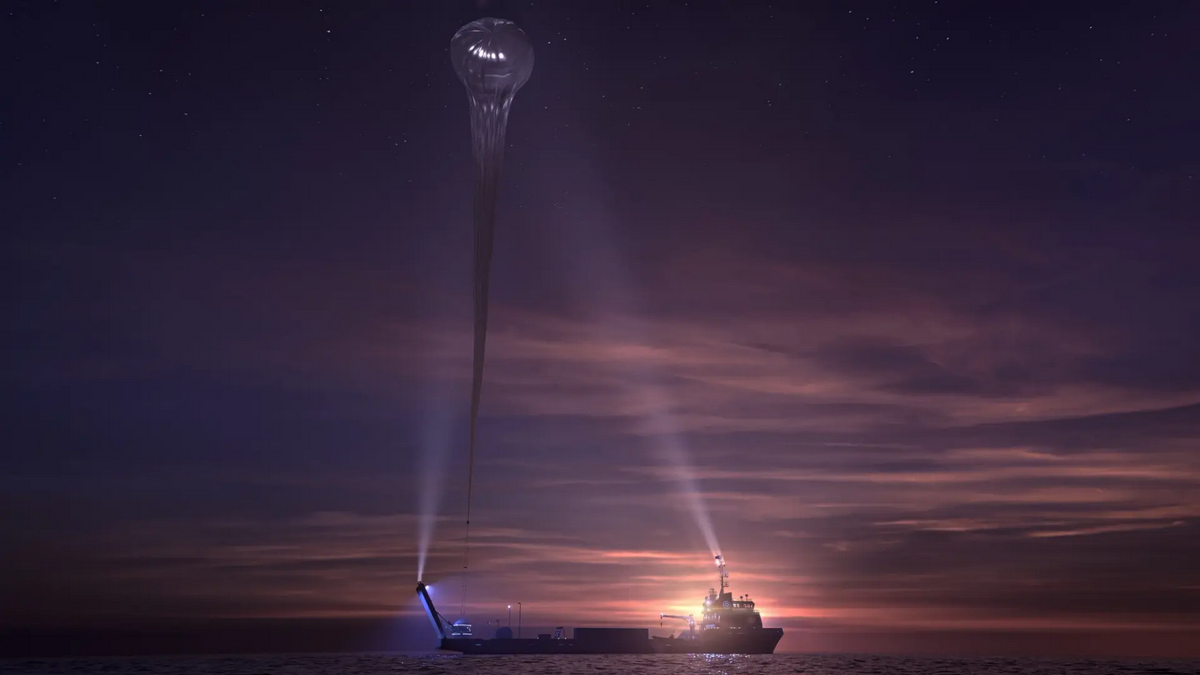
Space Perspective, the world’s first carbon-neutral spaceflight company, has announced the completion and arrival of its Marine Spaceport Voyager (MS Voyager) at its Florida base. Developed in collaboration with Guice Offshore, the 90-meter vessel is equipped to handle launch and recovery operations, positioning Space Perspective as the first space company to offer global launch services from a sea-based spaceport.

The MS Voyager is currently being equipped for the launch, recovery, and operations of SpaceBalloon capsules. The vessel will dock and begin sea operations as part of test flights scheduled to resume later in 2024. For reference, the Neptune spacecraft, designed to be the most accessible, durable, and safest spacecraft on or above Earth, consists of a SpaceBalloon, a backup descent system, and a capsule. The capsule’s interior is designed for maximum space and comfort, accommodating eight explorers and a captain. Once commercial operations begin, the Neptune spacecraft will set a record for the number of people delivered to the edge of space – one more than the NASA Space Shuttle mission STS-61-A.
The innovative patented launch system of the MS Voyager uses a series of rollers that work together to maneuver the balloons into a vertical position on the ship’s deck. This design significantly reduces the launch footprint compared to traditional balloon launches, eliminating the need for an aircraft carrier.
Taber MacCallum, founder and co-founder of Space Perspective, commented on the event: “The ability to launch and recover the Neptune capsule at sea provides a global scaling opportunity and an unprecedented solution to routine operational safety. We are proud to bring new spaceflight capabilities to Port Canaveral and the Space Coast.”
Named after the Voyager 1 space probe mission, MS Voyager is equipped with a dynamic positioning system, four engines, and four generators, making it highly maneuverable. Designed for the launch and recovery of space vehicles, MS Voyager features a flight control center on the bridge and a wide array of equipment to support the capsule for both pre-launch and post-flight operations. The role of the vessel is critical to the success of Space Perspective’s missions, as two years have been dedicated to installing cutting-edge equipment specifically for space launches.
The hermetically sealed Neptune spacecraft will gently land on the water, where fast boats will stabilize it before it is lifted aboard the MS Voyager using a specially constructed 15-meter A-frame – the largest custom-built A-frame for lifting space capsules. This water landing method, used since the Apollo missions and by SpaceX, ensures a safe return to Earth, leveraging the expertise of the Space Perspective team, which includes former SpaceX and NASA specialists in spacecraft launch and recovery.
&pp=ygUlTWFyaW5lIFNwYWNlcG9ydCBWb3lhZ2VyIChNUyBWb3lhZ2VyKQ%3D%3D
The adaptability of MS Voyager as a mobile sea-based spaceport offers Space Perspective researchers unique opportunities to view Earth’s landscapes from space. Its global mobility enables flexible scheduling, more frequent launches, and visits to various locations, enhancing the understanding of our planet’s beauty and fragility. The design of the spaceport ensures safe and efficient operations, minimizing wind impact, which, according to astronauts, transforms the experience for a broad audience.
&pp=ygUlTWFyaW5lIFNwYWNlcG9ydCBWb3lhZ2VyIChNUyBWb3lhZ2VyKQ%3D%3D
Active discussions are underway with several potential new locations around the world that will offer researchers stunning views of some of the most iconic geographical features.
Sea-based spaceports typically create ideal launch conditions in two ways: by navigating to areas with favorable weather, allowing for year-round operations in the region, and by moving with the sea breeze, so there is virtually no wind on the deck. This ensures more frequent launch opportunities and a wider range of times of day, including night flights for star observation and sunrise and sunset views for researchers.
The company describes the naming process for the spaceport as follows: “The name Voyager is a tribute to the Voyager 1 mission, which, at the insistence of astronomer Carl Sagan, took a photograph of Earth from the edge of the Solar System on February 14, 1990. This photograph, now known as the ‘Pale Blue Dot,’ inspired Sagan to write a book of the same name and his call to humanity to ‘cherish and protect the pale blue dot, the only home we’ve ever known’ – words that today resonate with Space Perspective’s mission.”
Source: Spacedaily