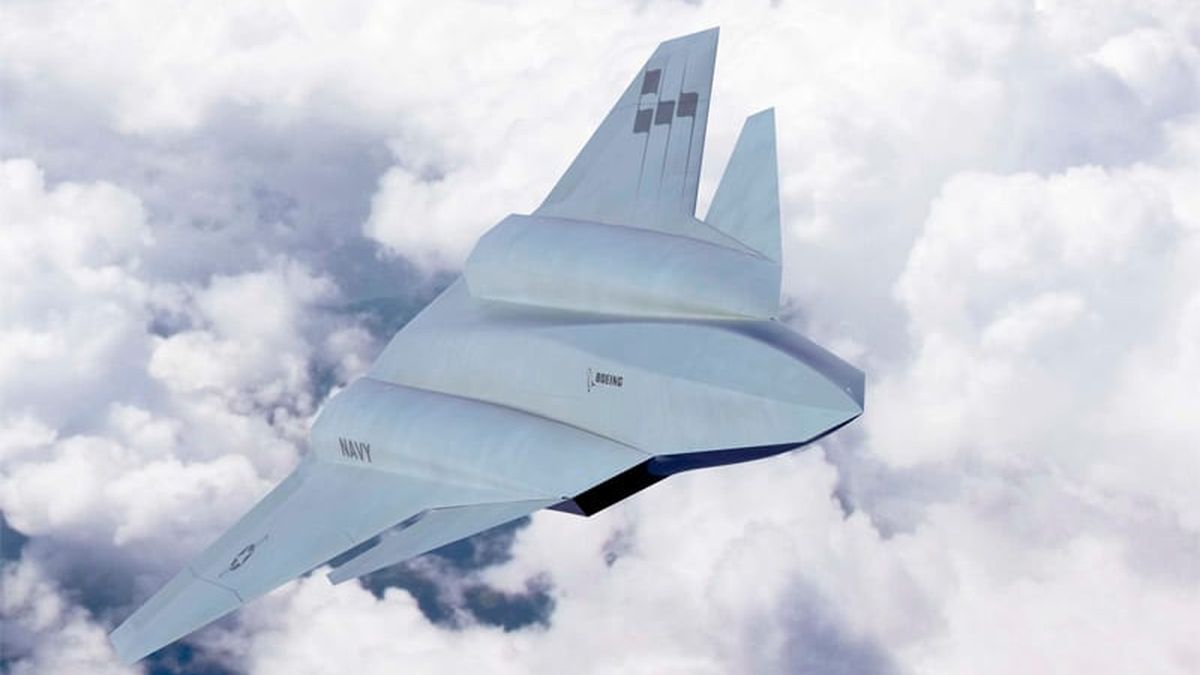
The U.S. Navy is moving closer to finalizing plans for its next-generation fighter jet, currently referred to as the F/A-XX. During the opening day of the Sea Air Space 2025 exhibition in Maryland (April 7–9), Navy officials shared some preliminary details about the project. One of the key expectations for the F/A-XX is improved range – around 25% greater than that of the current fifth-generation F-35C Lightning II. This enhancement reflects the Navy’s focus on extended operational reach in future combat scenarios.
A development contract is expected to be awarded soon, with Northrop Grumman and Boeing seen as the primary contenders.

Rear Admiral Michael “Buzz” Donnelly of the U.S. Navy told reporters that extending the operational range of future fighter jets remains a top priority for the service. According to him, this capability will be considered a defining feature of the F/A-XX program.
“Increasing range is a key capability we’re aiming to bring into service,” Donnelly stated. “We’re potentially looking at more than a 125% increase over what we have today. That would give us greater flexibility and expanded operational reach.”
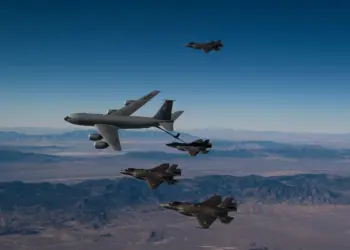
Donnelly also emphasized that the aircraft will be capable of aerial refueling. “All of our air wings, our tactics, and what we’re developing for the future are built around the ability to conduct organic refueling,” he said. “The F/A-XX will be able to make use of those capabilities.”
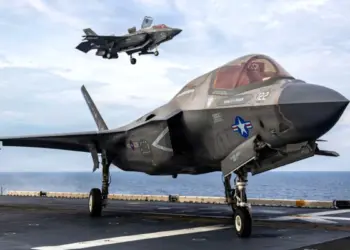
He confirmed that the F/A-XX is expected to have a 25% greater unrefueled range than current carrier-based fighters. For context, the Navy’s most advanced fighter in service, the F-35C, has a range of approximately 2,200 kilometers. A 25% increase would place the F/A-XX’s range at over 2,700 kilometers. Donnelly added that with in-flight refueling, the jet’s range would be effectively unlimited, limited only by the availability of tankers.
However, extended range won’t be the only advantage of the upcoming fighter. The aircraft is also expected to feature a low-observable design to reduce its radar signature, along with integrated support for artificial intelligence systems.
“The aircraft’s survivability and signature characteristics, which allow it to operate in contested airspace, will be aligned with the threats we anticipate beyond 2040,” Rear Admiral Donnelly explained. “This is important to us, as potential adversaries continue to advance their capabilities and improve the performance of their own fighters and weapons systems.”
According to Donnelly, the fighter will incorporate artificial intelligence and other advanced technologies aimed at improving command and control in the battlespace. The next-generation platform is expected to shift from a traditional “man-in-the-loop” model to a “man-on-the-loop” approach. This would enable a fully integrated architecture with the Navy’s unmanned systems. That includes concepts such as the Collaborative Combat Aircraft (CCA) program and the ability to operate alongside larger unmanned platforms – systems the Navy anticipates fielding in the future.
During the discussion, Donnelly stated that current fighter jets and refueling systems provide carrier-based aviation with a combat radius covering over 8 million square miles. With the addition of the MQ-25 Stingray unmanned refueler and the F/A-XX, this range could expand to 11 million square miles. The combat radius is a critical factor, as it represents the danger zone for the air wing, directly contributing to the survivability of the crew.
This aspect ties into the tactical realities and platform capabilities that enable the U.S. Navy to navigate the complex and pervasive intelligence, surveillance, and reconnaissance (ISR) systems employed by potential adversaries. “By being selective in our target choices, we can operate more effectively and maintain our presence for longer,” concluded Rear Admiral Michael Donnelly.
Source: interestingengineering